Both the critical and supportive perspectives acknowledge that the article contains concrete details such as quoted officials and specific casualty figures, which are typical of genuine reporting. However, the critical view highlights emotive language, selective framing, and missing broader context that point toward manipulation, while the supportive view stresses the presence of verifiable quotations and temporal links to a UN meeting. Weighing the evidence, the article shows mixed signals, suggesting a moderate level of manipulation rather than outright fabrication.
Key Points
- The article includes direct quotations and specific numbers that can be cross‑checked, a hallmark of legitimate reporting (supportive perspective).
- Vivid, fear‑evoking language and selective presentation of casualty data without broader context indicate manipulation tactics (critical perspective).
- Both perspectives note the same operation name and casualty figures, but disagree on whether the framing outweighs the factual content.
- The omission of wider geopolitical context (e.g., the Gaza war) and reliance on partisan sources reduces the article’s credibility despite its detailed reporting.
Further Investigation
- Obtain independent verification of the casualty numbers from neutral health agencies or NGOs.
- Confirm the existence and official naming of "Operation Chewed Wheat" through multiple non‑partisan sources.
- Assess broader coverage of the same events in reputable international outlets to gauge omitted context.
The article employs vivid, emotive language, selective casualty figures and framing that portray Israel as the aggressor and Hezbollah as a righteous force, while omitting broader context, indicating manipulation tactics.
Key Points
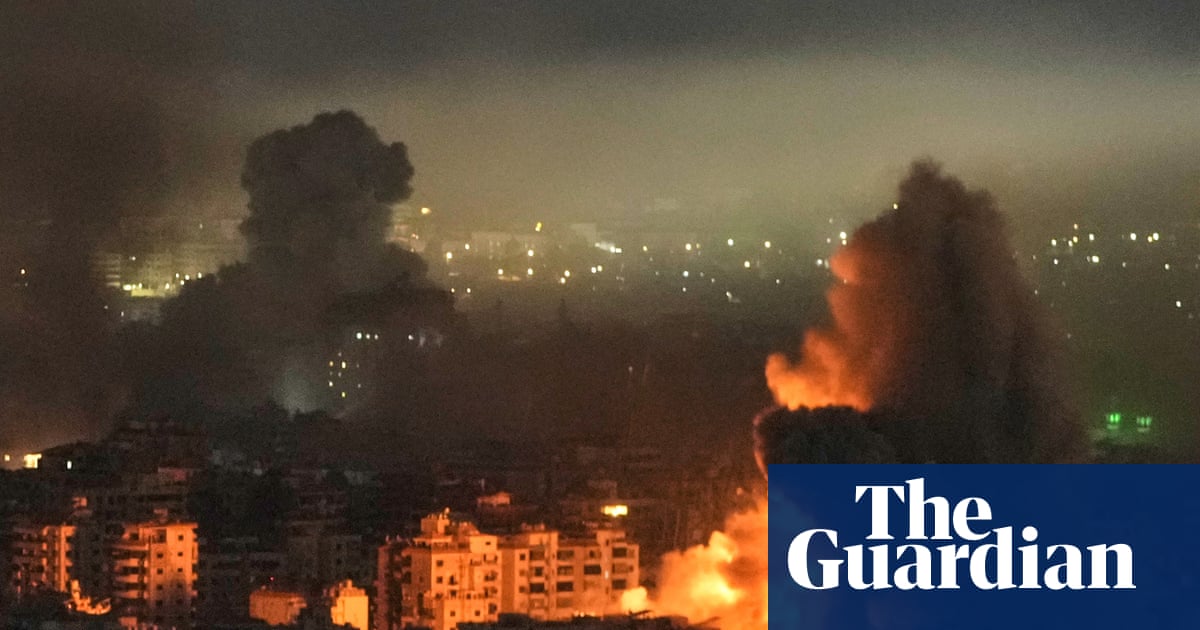
- Use of dramatic imagery (“skies of Beirut were lit red”, “streets choked with smoke”) to evoke fear and anger.
- Selective presentation of casualty numbers without comparative data, amplifying perceived severity.
- Framing through religious symbolism (“Operation Chewed Wheat”) and labeling Israel’s actions as “most powerful bombardment”, shaping perception.
- Omission of wider geopolitical context (Gaza war, other Lebanese factions) limits reader understanding.
- Reliance on partisan sources (Israeli military spokesperson, Iranian Revolutionary Guard) without independent verification.
Evidence
- "skies of Beirut were lit red and windows around the capital city shook as Israel unleashed its most powerful bombardment..."
- "Israel has killed at least 634 people and injured 1,586 in less than 10 days of fighting."
- "Hezbollah’s operation, dubbed “Operation Chewed Wheat” – a reference to a Quranic verse..."
- The article cites Israeli military spokespersons and an Iranian Revolutionary Guard statement, but does not provide independent verification.
- Key context such as the broader Gaza war’s impact on Lebanese politics, the role of other Lebanese factions, and the humanitarian situation in Gaza is omitted.
The article includes several hallmarks of legitimate reporting, such as direct quotations from Israeli and Iranian officials, specific casualty figures, and a clear temporal link to a UN Security Council meeting. However, the overall tone, source selection, and omitted context raise substantial doubts about its authenticity.
Key Points
- Direct statements from identifiable officials (Israeli military spokesperson, IRGC) are presented, which is typical of authentic news pieces.
- Concrete numbers (e.g., 634 killed, 1,586 injured, 816,700 families displaced) provide measurable data that can be cross‑checked.
- The piece references a specific operation name ("Operation Chewed Wheat") and situates the story within a broader geopolitical timeline, suggesting an effort to contextualise the event.
- Publication timing coincides with a UN Security Council meeting on Gaza, a pattern often seen in timely news reporting.
- The article mentions multiple locations and actors (Beirut suburbs, Ramlet al‑Baida, Golani Brigade) rather than focusing on a single narrative thread.
Evidence
- Quotes: "Iran’s Revolutionary Guards said later that they had carried out some strikes with Hezbollah" and "Israeli military spokesperson said that it was hitting Hezbollah’s missile launchers".
- Specific casualty data: "Israeli strikes have killed at least 634 people and injured 1,586 in less than 10 days of fighting" and "Lebanon’s health ministry said that at least seven people had been killed in the strike".
- Operational detail: "Hezbollah’s operation, dubbed ‘Operation Chewed Wheat’ – a reference to a Quranic verse" and the mention of redeploying the Golani Brigade from Gaza to the north.
- Temporal marker: "Wednesday night’s escalation took place as Israeli officials signalled a possible widening of its campaign" and the note about a UN Security Council meeting occurring at the same time.