Both analyses agree the piece contains concrete figures and a named quote, but the critical perspective highlights emotive language, selective statistics, and a false‑dilemma framing that suggest manipulation. The supportive view notes the presence of specific data and a verifiable speaker, yet also points out the lack of independent corroboration. Weighing the strong manipulation cues against the modest evidentiary grounding leads to a moderate‑high manipulation rating.
Key Points
- The article employs fear‑laden wording and a binary framing that aligns with manipulation patterns.
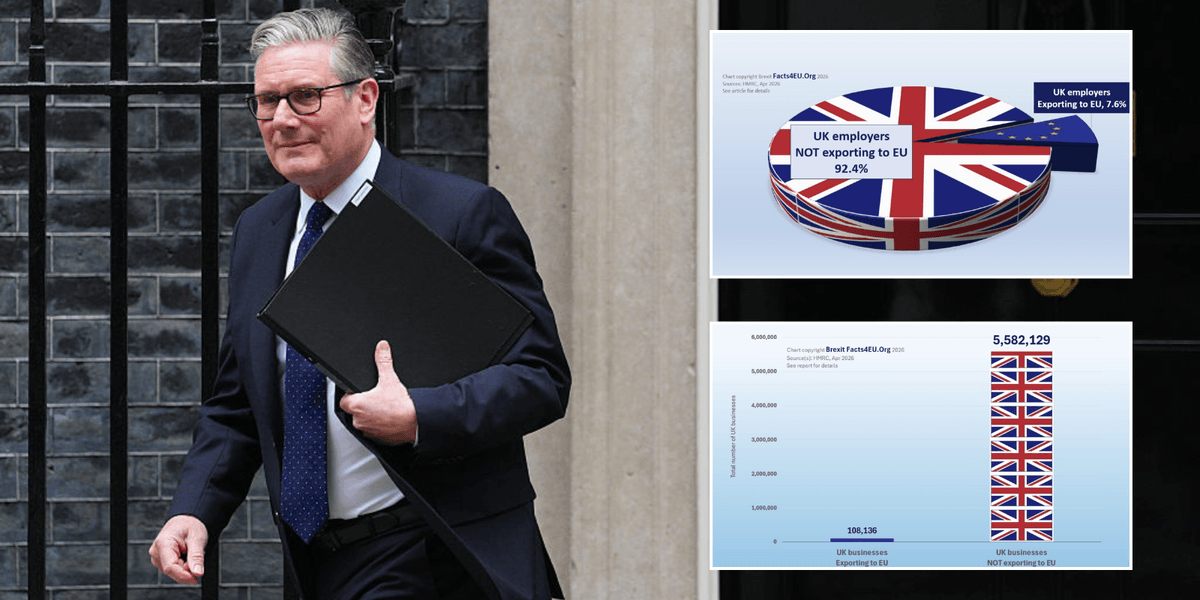
- It does provide specific numbers (1.9% export share, 108,136 businesses) and a direct quote from Shadow Business Secretary Andrew Griffith.
- No independent verification of the HMRC statistic or the claim that 100% of businesses will face extra costs is presented.
- Selective use of a single partisan authority (GB News) amplifies bias without broader context.
- Overall, the presence of data does not offset the persuasive tactics, indicating moderate manipulation.
Further Investigation
- Verify the HMRC export share figure for 2025 and its methodology.
- Locate the full transcript of Andrew Griffith's GB News interview to confirm wording and context.
- Examine broader trade data to assess whether the EU‑reset would indeed impose extra costs on all UK businesses.
- Identify any additional independent expert commentary on the EU‑reset's economic impact.
The piece employs emotionally charged language, selective statistics, and false‑dilemma framing to portray Labour’s EU‑reset as a catastrophic threat to British businesses. It relies on a partisan authority and omits broader trade context, creating a tribal us‑vs‑them narrative.
Key Points
- Cherry‑picked export figures are presented as proof of universal harm
- Fear‑based wording (“shackle”, “trojan horse”, “surrender”) amplifies perceived threat
- Authority overload via a single partisan quote without independent verification
- False‑dilemma that either accept Labour’s plan or face 100 % regulatory burden
- Tribal division framing EU bureaucracy as an external enemy
Evidence
- "Just two per cent of British businesses export goods to the EU yet Keir Starmer wants to shackle the other 98 per cent domestic businesses to Brussels’s bureaucratic rulebook"
- "Labour’s 'EU Reset' is a Trojan Horse surrender of powers that rightly belong with Parliament"
- "Shadow Business Secretary Andrew Griffith told GB News: \"These figures blow the Government’s strategy out of the water.\"
- "However, due to the Government’s EU re‑set, 100 per cent of all UK businesses will have extra costs and rules imposed"
- "Only 1.9 per cent of all British businesses exporting goods to the EU, yet 98.1 per cent of them would be subject to a thicket of EU laws and regulations"
The article contains concrete numbers (HMRC export share, total business count) and a direct quote from a named government spokesperson, which are hallmarks of genuine reporting, but these elements are presented without independent verification or balanced context.
Key Points
- Provides specific quantitative data (e.g., 1.9% of UK businesses exporting to the EU, 108,136 businesses out of 5,690,265).
- Cites an official source (HMRC) for the export percentage.
- Includes a verbatim statement from Shadow Business Secretary Andrew Griffith, a recognizable public figure.
Evidence
- "According to the HMRC, 1.9 per cent of all UK businesses were exporting goods to the EU in 2025."
- "Shadow Business Secretary Andrew Griffith told GB News: \"These figures blow the Government’s strategy out of the water.\""
- "This equates to only 108,136 businesses out of all 5,690,265 businesses across the UK, who are involved in exporting goods to the EU."