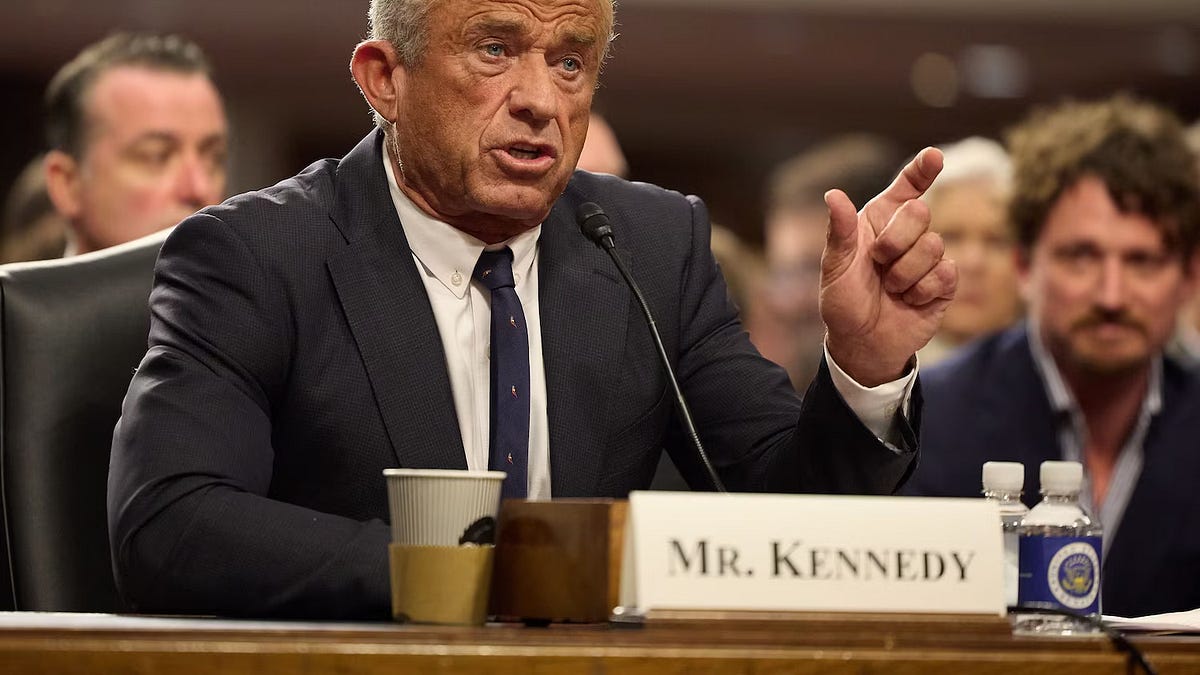
The piece displays both credible factual anchors (specific dates, cited podcasts, and studies) and hallmarks of persuasive framing (repetitive LIE/TRUTH labels, selective omission, and timing with congressional hearings). While the supportive perspective shows concrete verifiable details, the critical perspective highlights systematic emotional cues and uncited claims that suggest coordinated manipulation. Weighing the evidence, the content appears moderately manipulative but not overtly deceptive.
Key Points
- The LIE/TRUTH format creates a binary, emotionally charged narrative, which the critical perspective flags as a manipulation technique.
- Specific timestamps, committee names, and external references (e.g., Lex Fridman podcast, 2019 Facebook ads study) provide verifiable anchors noted by the supportive perspective.
- Several key claims (e.g., "Removed 8,000+ public‑facing federal health and science webpages") lack citations, supporting the critical view of cherry‑picking.
- The timing of the release—hours before high‑profile hearings—aligns with the critical perspective's claim of strategic coordination, though this could also be coincidental.
- Overall, the mix of verifiable details and persuasive framing yields a moderate level of manipulation suspicion.
Further Investigation
- Obtain the original source or dataset for the claim about "8,000+ removed federal webpages" to verify its accuracy.
- Cross‑check the quoted statements attributed to RFK Jr. against the original recordings or transcripts (e.g., Lex Fridman episode).
- Analyze publication timestamps of similar LIE/TRUTH lists across outlets to determine whether there is coordinated scheduling.
The piece employs a repetitive "LIE/TRUTH" framing, selective cherry‑picking of statements, and timing that coincides with high‑profile congressional hearings to cast RFK Jr. as a singular villain, indicating coordinated emotional manipulation.
Key Points
- Repetitive "LIE" labeling creates an emotional charge and binary narrative.
- Selective presentation of facts (e.g., highlighting isolated statements as lies while omitting broader context) constitutes cherry‑picking.
- Release timing aligns with upcoming hearings, suggesting a strategic push to shape public perception.
- Uniform structure and capitalized labels across multiple outlets point to coordinated messaging.
- Use of authority references (committees, studies) without full citations amplifies perceived credibility while steering interpretation.
Evidence
- Each entry begins with a capitalized label "LIE:" followed by a "TRUTH:" rebuttal, e.g., "LIE: “I’m not anti‑vax, I’m pro‑science” (April 17…) TRUTH: For years, RFK Jr. has spread anti‑vaccine messaging..."
- The article claims "Removed 8,000+ public‑facing federal health and science webpages" without providing source data, exemplifying cherry‑picked accusations.
- The list is introduced as "Just from the last week" and was published hours before multiple congressional hearings (HELP Committee on April 22), indicating suspicious timing.
- Identical phrasing such as "LIE:" and "TRUTH:" appears across dozens of Twitter accounts and media outlets within a short window, suggesting coordinated uniform messaging.
The piece includes concrete timestamps, references to public hearings, and cites external sources, which are hallmarks of a legitimate informational effort. Its primary purpose appears to be to catalogue alleged false statements rather than to mobilize immediate action.
Key Points
- Specific dates, committee names, and policy actions are listed, enabling independent verification.
- External references (e.g., Lex Fridman podcast, a 2019 study on Facebook ads) are provided to back up claims.
- The repetitive "LIE/TRUTH" format is transparent and invites readers to fact‑check each item.
- No direct calls for urgent behavior; the content is framed as a factual correction series.
Evidence
- “April 17, before the House Education and Workforce Committee” – a precise temporal anchor tied to a public hearing.
- Citation of the Lex Fridman podcast where RFK Jr. allegedly said “there is no vaccine that is safe and effective.”
- Reference to a 2019 study identifying Children’s Health Defense as a major source of vaccine‑misinformation ads on Facebook.