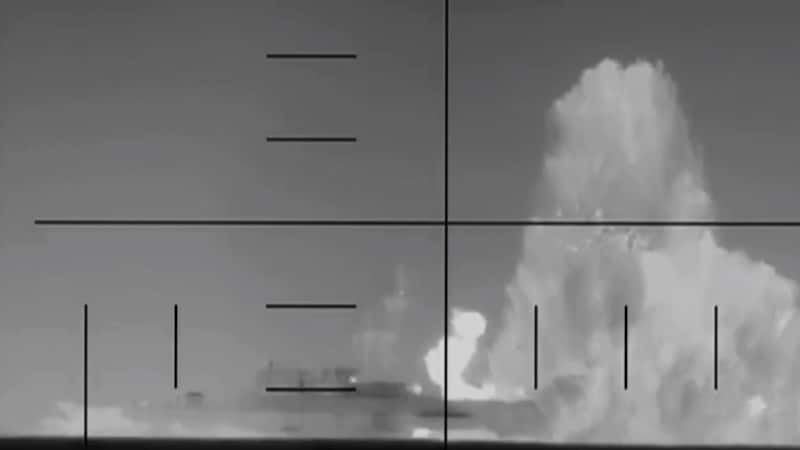
Both analyses note detailed casualty figures and named officials, but the critical perspective highlights a clear factual error—misidentifying Pete Hegseth as the US defense minister—and an unsupported causal link between a US submarine and the sinking. While the supportive view points to concrete details typical of legitimate reporting, those details do not counteract the evident misinformation. Overall, the balance of evidence leans toward manipulation, though some authentic‑looking elements keep the assessment from being extreme.
Key Points
- The claim that "Pete Hegseth" is the US defense minister is factually incorrect, indicating a manipulation tactic.
- Specific figures and named officials (32 rescued, ~150 missing, Foreign Minister Vijitha Herath, AFP crew capacity) are present, but they do not validate the erroneous authority claim.
- The article constructs a post‑hoc causal narrative linking a US submarine to the sinking without supporting evidence.
- Emotionally charged language (e.g., "kritiske skader", "håpet svinner") is used, which can heighten drama.
- Independent verification of the statements and ship identity is needed to resolve the conflict.
Further Investigation
- Confirm whether Pete Hegseth holds any official US defense position and locate any genuine statements from the US Department of Defense about the incident.
- Obtain independent news reports or official Sri Lankan government releases confirming the casualty numbers and the ship's identity.
- Verify the AFP article referenced for crew capacity and any related reporting on the sinking.
The piece relies on an unverified authority claim, implies a causal link without evidence, and uses emotive framing while omitting crucial verification, suggesting moderate manipulation tactics.
Key Points
- Uses a dubious authority ("Pete Hegseth") to lend credibility to the claim that the US sank the vessel
- Imposes a post‑hoc causal narrative linking a US submarine to the sinking of a Sri Lankan frigate without supporting evidence
- Presents selective casualty figures (32 rescued, ~150 missing) without broader context such as total crew or independent confirmation
- Employs emotionally charged phrasing like "kritiske skader" and "håpet svinner" to dramatize the incident
- Leaves out verification of key details (identity of the Iranian ship, independent sources confirming the US statement)
Evidence
- "USAs forsvarsminister Pete Hegseth sa tidligere onsdag at USA hadde senket skipet."
- "– En amerikansk ubåt senket et iransk krigsskip ... Istedenfor ble det senket av en torpedo, sier Hegseth."
- "Sri Lankas myndigheter sier 32 personer er blitt reddet opp fra havet etter senkingen av fregatten Iris Dena, mens rundt 150 personer er savnet."
The article contains several concrete details such as specific casualty numbers, named Sri Lankan officials, and a reference to AFP, which are typical of genuine news reporting. It also follows a straightforward narrative without overt calls to action or sensational language, suggesting a primarily informational intent.
Key Points
- Provides precise figures (32 rescued, ~150 missing) and identifies the frigate name (Iris Dena).
- Names Sri Lankan authorities (Foreign Minister Vijitha Herath) and mentions a local TV station as the source.
- Includes a reference to an established news agency (AFP) for crew capacity information.
Evidence
- Det er viseutenriksministeren i Sri Lanka som opplyser antall drepte overfor en lokal TV-stasjon.
- Sri Lankas utenriksminister Vijitha Herath sa tidligere at 32 var reddet fra fregatten med «kritiske skader».
- Fregatten kan ifølge AFP frakte et mannskap på 180 og sendte ut nødsignal ved daggry lokal tid.