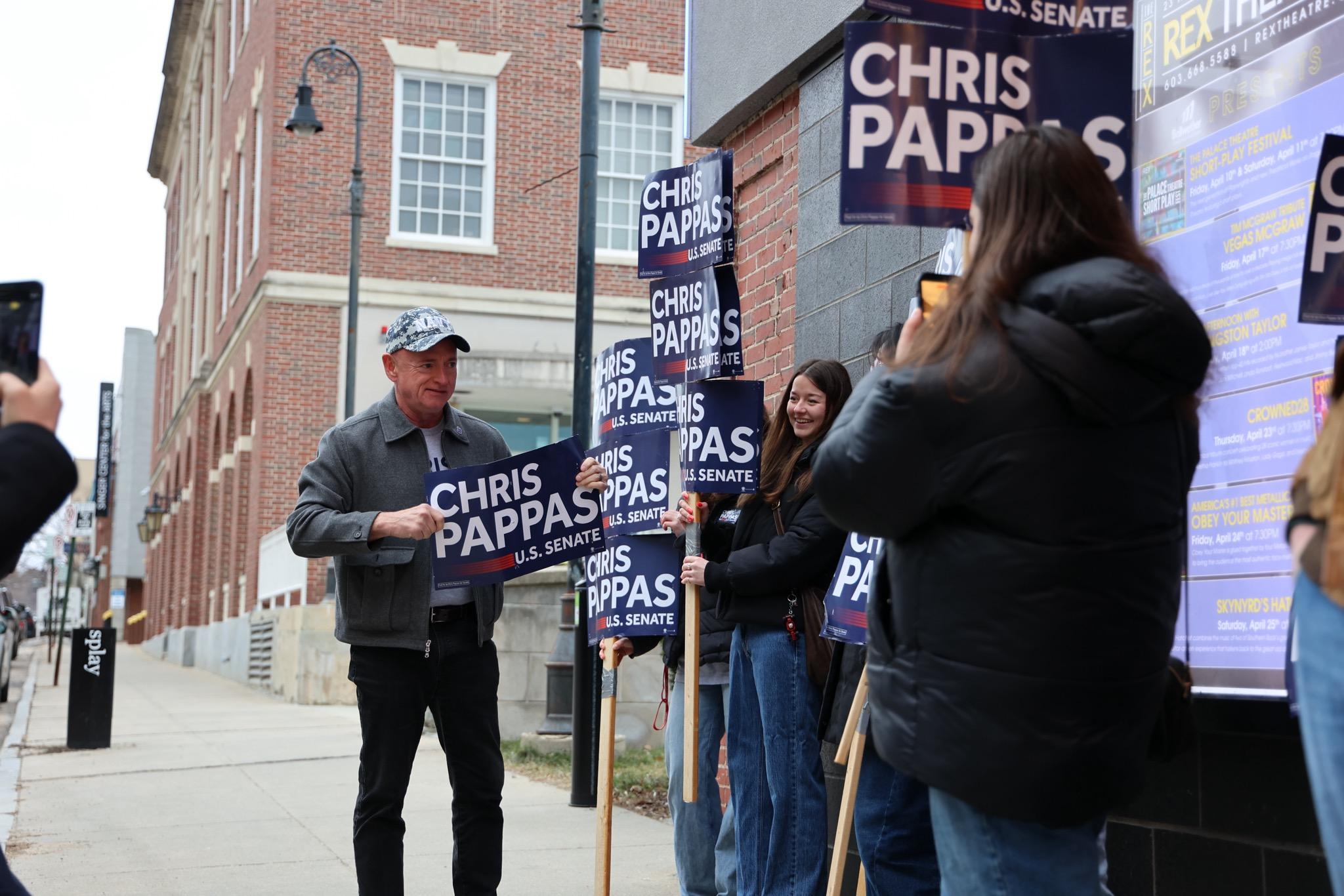
Both analyses agree the article lists named politicians and event details, but the critical perspective flags framing language and selective sourcing that could create a mild band‑wagon effect, whereas the supportive perspective sees these elements as typical campaign communication without overt persuasion. We weigh the subtle framing as modest manipulation, though the lack of overt urgency and the presence of verifiable facts temper the concern.
Key Points
- The article includes verifiable names and event specifics, supporting the supportive perspective’s claim of factual grounding.
- Framing phrases like “perfect storm” and calls such as “Get in while the getting’s good” are identified by the critical perspective as subtle urgency cues.
- Absence of Republican viewpoints limits balance, a point raised by the critical perspective but not contradicted by the supportive view.
- Both perspectives note that quotes come from multiple Democratic strategists, reducing the risk of a single authoritative voice.
- Overall, the manipulation cues are present but modest, suggesting a low‑to‑moderate manipulation score.
Further Investigation
- Obtain fundraising totals for both Democratic and Republican candidates to assess balance.
- Check whether comparable articles about Republican candidates use similar framing or are omitted.
- Interview the quoted strategists to verify the context of their statements and whether they were solicited for this piece.
The piece uses subtle framing and selective quoting of Democratic insiders to present New Hampshire’s 2028 Senate race as a high‑stakes, time‑sensitive opportunity, while omitting opposing viewpoints and concrete data. These tactics create a mild bandwagon effect and encourage early donor involvement, benefiting Democratic candidates.
Key Points
- Framing language such as "perfect storm" and "most important Senate races" positions the race as urgent and crucial
- Repeated reliance on Democratic strategists and high‑profile politicians serves as an appeal to authority and a soft bandwagon cue
- Calls to action like "Get in while the getting’s good" and "It’s never too early" push readers toward early financial or volunteer support
- Absence of Republican perspectives, policy specifics, or fundraising figures limits context and skews the narrative toward the Democratic agenda
Evidence
- "The New Hampshire Senate race is a perfect storm for ambitious Democrats."
- "Get in while the getting’s good," said New Hampshire‑based Democratic strategist Lucas Meyer.
- Quotes from multiple Democratic strategists (Aaron Jacobs, Lucas Meyer, Kelsi Browning) and officials (Mark Kelly, Pete Buttigieg, etc.)
- No mention of Republican candidates, their platforms, or any fundraising totals
The article resembles ordinary campaign outreach, naming specific politicians, dates, and locations, and it avoids overt emotional appeals or deceptive claims.
Key Points
- Multiple public figures (e.g., Sen. Mark Kelly, Gov. Andy Beshear, Pete Buttigieg) are explicitly named, providing verifiable anchors.
- Concrete event details (town halls, fundraisers, roundtables) and geographic references (Keene, Manchester, Seacoast) allow independent cross‑checking.
- The tone is informational rather than alarmist; there are no urgent calls to action, fear‑mongering, or binary framing.
- Quotes come from several Democratic strategists, offering a range of perspectives rather than a single authoritative voice.
Evidence
- "Sen. Mark Kelly of Arizona stumped for Pappas's Senate campaign in New Hampshire on Friday; Kentucky Gov. Andy Beshear joined him for a fundraiser earlier this month; former Transportation Secretary Pete Buttigieg spent three days barnstorming for him in February..."
- "You can pretty much get through all 10 counties in one day if you were doing a big swing," Browning said.
- "It’s never too early," Meyer said, emphasizing a general strategic recommendation rather than a time‑critical demand.