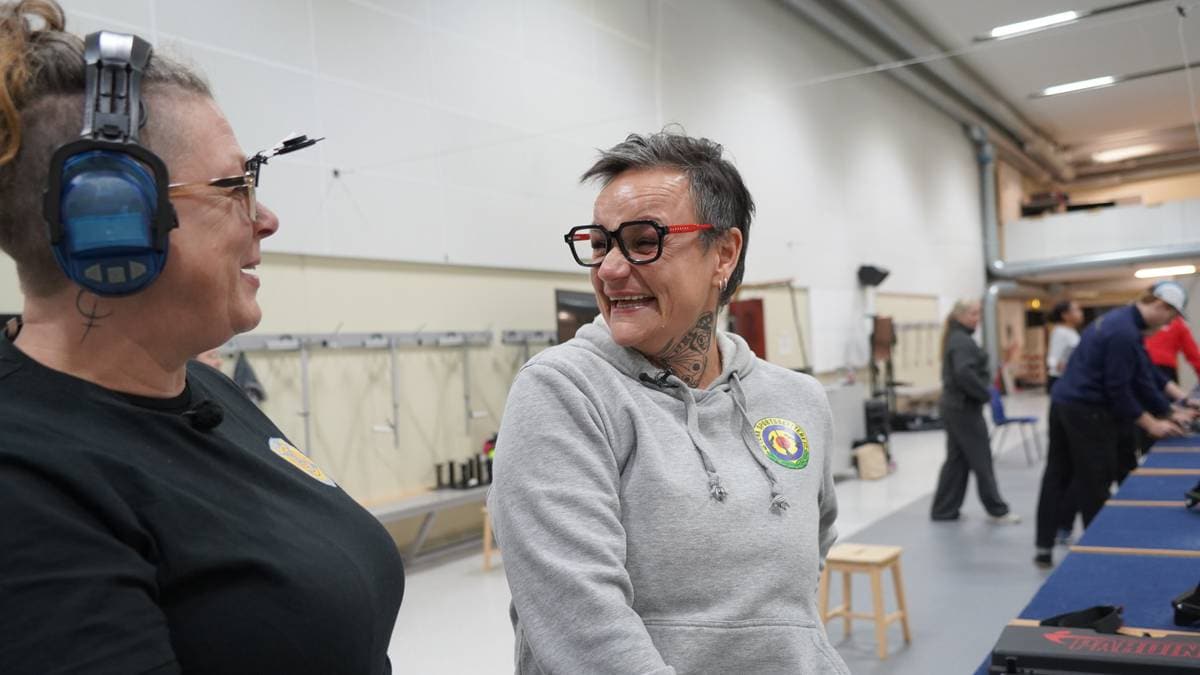
Both analyses agree the article reports low female participation in sport shooting and includes verifiable quotes and specific statistics. The critical perspective notes mild framing, selective statistics, and lack of dissenting voices, suggesting a low level of bias, while the supportive perspective emphasizes the presence of source credentials, contextual data, and a generally informational tone. Overall, the evidence points to limited manipulation, placing the content toward the lower end of the manipulation spectrum.
Key Points
- The article provides concrete, time‑stamped statistics and quotes from identifiable officials and experts, which supports authenticity.
- Mild positive framing (e.g., "hurra og veldig gøy") and the absence of alternative viewpoints introduce a subtle bias, though not a strong persuasive push.
- Both perspectives acknowledge the article’s informational tone and lack of overt calls to action, reinforcing its credibility.
- The selective presentation of percentages without absolute numbers limits context, a point highlighted by the critical perspective.
Further Investigation
- Obtain absolute numbers of female and male participants to contextualize the percentages.
- Compare these statistics with participation rates in comparable sports to assess the urgency implied.
- Seek comments from independent experts or dissenting voices to evaluate whether the narrative omits credible counter‑arguments.
The article primarily reports on low female participation in sport shooting and describes grassroots efforts to improve gender balance. Manipulation cues are limited to mild framing, selective statistics, and the absence of dissenting perspectives, which together suggest low but detectable bias.
Key Points
- Framing the issue positively (“sisterhood”, “hurra og veldig gøy”) nudges readers toward support without presenting counter‑arguments.
- Selective use of statistics (e.g., 0‑11 % female share, 72.3 % growth since 2005) without absolute numbers or comparison to other sports can create a perception of urgency while omitting context.
- Authority citations are limited to federation officials, a gender researcher, and a world champion, which lend credibility but are not presented as a broad consensus, hinting at a subtle appeal to authority.
- The article omits any critical voices or alternative explanations, resulting in a one‑sided narrative that subtly pressures readers to accept the presented solution.
- Emotional language is sparse but strategically placed (e.g., “hurra og veldig gøy”) to generate a feel‑good response that reinforces the desired narrative.
Evidence
- “Det er ikke så ofte vi har opplevd. Det er faktisk en banal ting som man blir så glad over.” – mild positive emotional cue.
- “For under elleve prosent av skytterne deres er kvinner… antall kvinnelige medlemmer økte med 72,3 prosent fra 2005 til 2024.” – selective statistics without absolute counts.
- Quotes from “Helene Rønningen, ansvarlig for breddeidrett i Norges sportsskytterforbund” and “Hanne Sogn, kjønnsforsker” provide authority but no dissenting expert views.
- Absence of any opposing perspective: the piece never includes statements from male shooters who might question the need for separate women‑only events.
The article displays several hallmarks of legitimate communication, such as verifiable quotes from relevant officials and experts, concrete statistics with temporal context, and a balanced discussion of multiple contributing factors. Its tone is informational rather than persuasive, and it does not employ urgent or coercive language.
Key Points
- Named sources (federation official, gender researcher, world champion) are presented with their credentials, allowing verification
- Specific, time‑stamped statistics (e.g., 11 % female share, 72.3 % growth since 2005, 4000 women members in 2024) are provided rather than vague claims
- The piece acknowledges uncertainty (the federation does not know why the gap exists) and lists several possible explanations, showing nuance
- Emotional language is mild and anecdotal, not used to manipulate; the narrative focuses on reporting an event and ongoing initiatives
- No overt call‑to‑action, commercial promotion, or polarising framing is present, indicating an informational rather than propagandistic intent
Evidence
- Quote from Helene Rønningen, responsible for breadth sport at Norges sportsskytterforbund, discussing low female participation
- Quote from Hanne Sogn, gender researcher at Norges idrettshøgskole, providing academic perspective on barriers
- Quote from world‑champion Jeanette Hegg Duestad, endorsing the sport and noting it is perceived as a "litt gutteidrett"