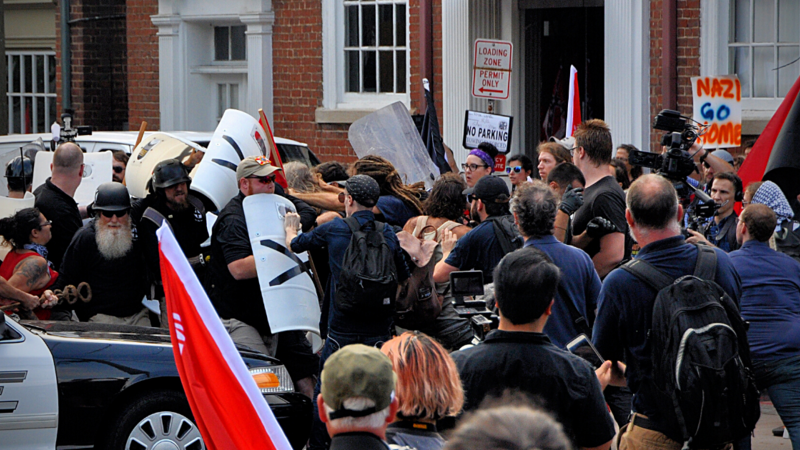
Both the critical and supportive perspectives agree that the content relies heavily on emotionally charged language, unverified claims of a DOJ indictment, and citations of extremist figures, suggesting a high likelihood of manipulation. While the supportive view notes the presence of verbatim tweet excerpts as a superficial authenticity cue, it also acknowledges the absence of concrete evidence. Consequently, the balance of evidence points toward the content being largely manipulative.
Key Points
- The text uses fear‑inducing descriptors and a false‑dilemma framing SPLC as a conspiratorial villain.
- Both perspectives highlight the lack of verifiable DOJ indictment documents or court filings.
- Verbatim social‑media excerpts are present, but their authenticity and relevance remain unverified.
- Repeated slogans and coordinated messaging patterns suggest orchestrated amplification.
- Absence of broader context or counter‑evidence weakens any claim of balanced reporting.
Further Investigation
- Obtain the alleged DOJ indictment or official press release to confirm its existence.
- Verify the authenticity and timestamps of the quoted tweets via the platforms' archives.
- Check SPLC's public statements or legal filings regarding any indictment or related investigation.
- Search court docket databases for any case involving SPLC and the described online chat group.
The text employs charged language, appeals to dubious “authorities,” and repeats a coordinated narrative that frames the SPLC as a conspiratorial villain, while omitting verifiable evidence of the alleged indictment. These tactics create fear, tribal division, and a false‑dilemma that pressures readers to accept the narrative without critical scrutiny.
Key Points
- Emotional manipulation through vivid, fear‑inducing descriptors (e.g., “doxed my house… almost getting murdered,” “fed‑jacketing narrative”),
- Appeal to questionable authority figures such as Jack Posobiec, Richard Spencer, and Augustus Invictus to lend credibility
- Uniform, rapid repetition of the slogan “Charlottesville was staged by the SPLC” across multiple accounts, indicating coordinated messaging
- Logical fallacies and false dilemmas that force a binary choice between a “genuine indictment” and a “SPLC false‑flag” without middle ground
- Absence of concrete evidence (no DOJ press release, no court documents) and omission of broader context about SPLC’s investigative work
Evidence
- "Earlier this week, the Trump administration unveiled a politically motivated indictment against the Southern Poverty Law Center..."
- "The new line that I worked with the SPLC is the laziest fed‑jacketing narrative yet."
- "Charlottesville was staged by the SPLC" — Jack Posobiec (@JackPosobiec) April 22, 2026
- "Conservatives are dumb... we’re not able to criticize it productively, precisely because conservatives are retards."
- Repeated claims that “the indictment alleges that one SPLC informant was part of an ‘online leadership chat group’ that helped plan the Charlottesville rally"
The piece contains a few surface‑level legitimacy cues—verbatim tweets with timestamps and a reference to a DOJ indictment—but these are outweighed by the absence of verifiable documentation, reliance on extremist personalities, and heavy use of emotionally charged, tribal language, indicating a largely manipulative narrative.
Key Points
- Verbatim social‑media excerpts (e.g., Nick Fuentes, Jack Posobiec, Augustus Invictus) with dates suggest the author copied real posts.
- The text mentions a DOJ indictment, which would be a public legal document if it existed, providing a potential anchor for fact‑checking.
- Multiple right‑wing figures are quoted, showing an attempt to present an internal debate rather than a single‑sourced claim.
Evidence
- "Nick Fuentes (@NickJFuentes) April 23, 2026" tweet quoted verbatim.
- "Jack Posobiec (@JackPosobiec) April 22, 2026" tweet stating "Charlottesville was staged by the SPLC".
- Reference to a DOJ indictment alleging an SPLC informant was in an "online leadership chat group" linked to the Charlottesville rally.