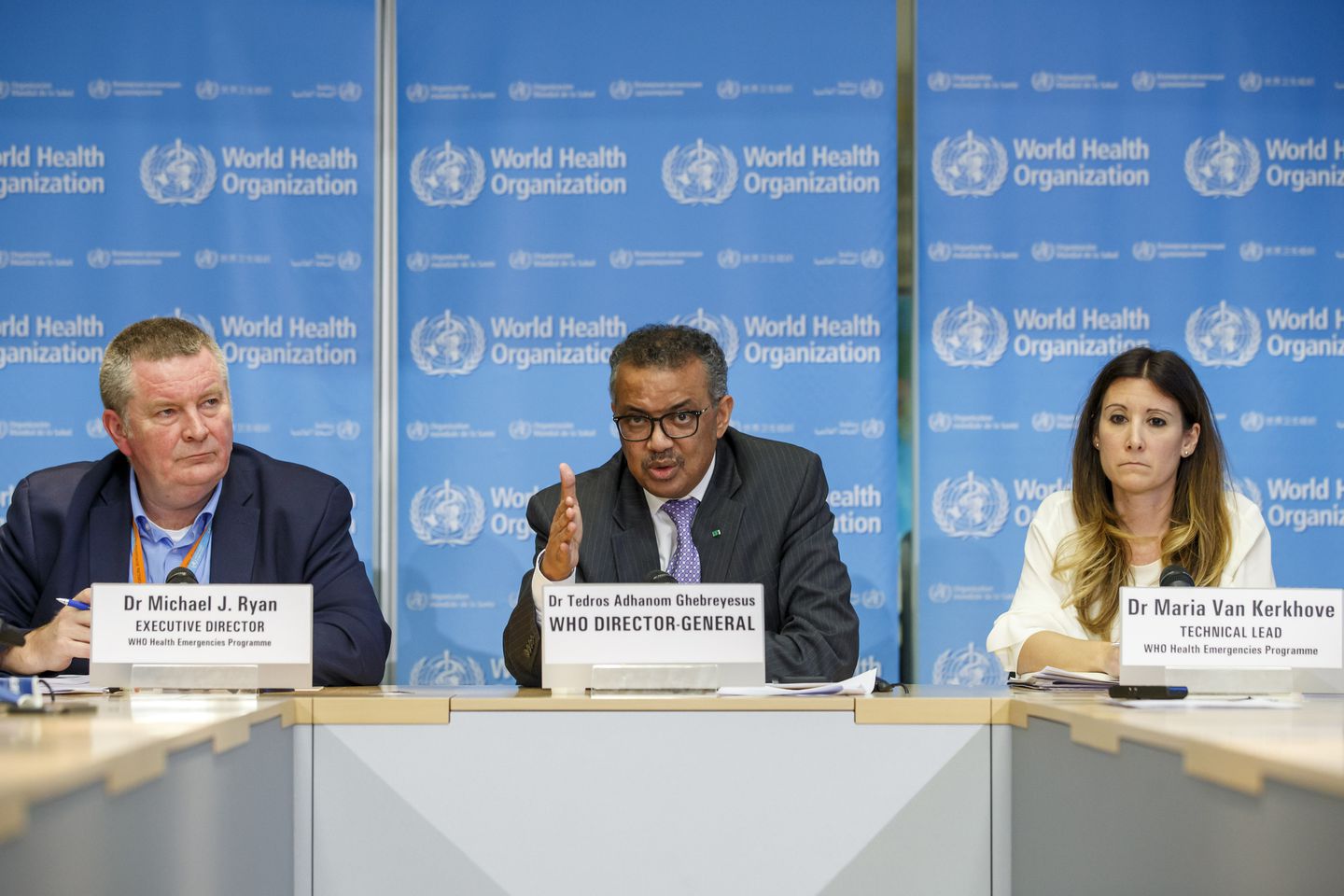
Both analyses agree the piece contains verifiable WHO references—a specific executive‑board meeting, a timestamped quote from Dr. Michael Ryan, and raw IFR calculations—but they differ on how those facts are used. The critical perspective highlights selective quoting, cherry‑picked fatality rates, and emotive framing that create a skeptical narrative, while the supportive perspective notes the presence of concrete source details and a lack of overt call‑to‑action. Weighing the evidence, the content shows genuine source material mixed with manipulative framing, suggesting a moderate level of manipulation.
Key Points
- The article cites a real WHO executive‑board session (5 Oct 2020) and a direct quote from Dr. Michael Ryan, confirming some factual grounding.
- It isolates a single infection‑fatality estimate (0.14%) without context, confidence intervals, or age‑specific risk, which the critical view flags as cherry‑picking.
- Framing language (e.g., "draconian policies," "over‑reporting") and claims of media suppression create an us‑vs‑them narrative, a hallmark of manipulative content.
- Both perspectives note the inclusion of raw numbers and an attempt to link to original video, but the overall presentation leans toward a partisan interpretation.
Further Investigation
- Verify the full context of Dr. Michael Ryan's statement and whether the 10% infection estimate was presented as a provisional range.
- Obtain the original WHO video to confirm the exact wording and any accompanying qualifiers about uncertainty.
- Compare the presented IFR with peer‑reviewed epidemiological studies that include age‑adjusted rates and confidence intervals.
The piece uses selective WHO statements, cherry‑picked fatality figures and emotive framing to portray COVID‑19 as no more dangerous than the flu, while casting mainstream media and the WHO as out of touch or suppressive. These tactics create an us‑vs‑them narrative and encourage readers to side with “COVID skeptics.”
Key Points
- Selective quoting of WHO officials to lend authority while ignoring broader WHO context
- Cherry‑picking an infection‑fatality rate of 0.14% and comparing it to seasonal flu without presenting confidence intervals or age‑specific risks
- Framing language that denigrates mainstream media and public health measures (e.g., “draconian policies,” “scary headline,” “over‑reporting”)
- Appeal to consensus and bandwagon (“many experts and studies,” “COVID sceptics have been right all along”)
- Implied suppression of dissent by claiming “None of the mainstream press picked up on this.”
Evidence
- "WHO has finally confirmed what we (and many experts and studies) have been saying for months – the coronavirus is no more deadly or dangerous than seasonal flu."
- "Dr Michael Ryan, the WHO’s Head of Emergencies revealed that they believe roughly 10% of the world has been infected..."
- "0.14% is over 24 times LOWER than the WHO’s ‘provisional figure’ of 3.4% back in March."
- "None of the mainstream press picked up on this. Though many outlets reported Dr Ryan’s words, they all attempted to make it a scary headline and spread more panic."
- "It’s actually good news. And confirms, once more, that the virus is nothing like as deadly as everyone predicted."
The piece shows a few legitimate communication cues—specific reference to a WHO executive‑board meeting, a quoted statement with a precise timestamp, and an attempt to link to primary audio—but these are outweighed by selective data use, lack of context, and framing that aligns with anti‑lockdown narratives.
Key Points
- Cites a concrete WHO session (34‑member executive board on 5 Oct 2020) and gives a timestamp for the quoted remark.
- Provides a verbatim quote from Dr. Michael Ryan about a 10% global infection estimate.
- Includes an “UPDATE” that attempts to direct readers to the original WHO video and a ripped audio file.
- Presents raw numbers (global population, deaths, IFR) in a straightforward tabular style.
- Does not issue an explicit call‑to‑action, focusing instead on presenting the alleged “news”.
Evidence
- “Our current best estimates tell us that about ten percent of the global population may have been infected by this virus…" (quoted from Dr. Ryan).
- The article notes the location of the video: “click ‘Session 1’ and skip to 1:01:33 to hear the exact quote.”
- It lists the calculated infection fatality rate: 1,061,539 deaths ÷ 780,000,000 infections ≈ 0.14%.