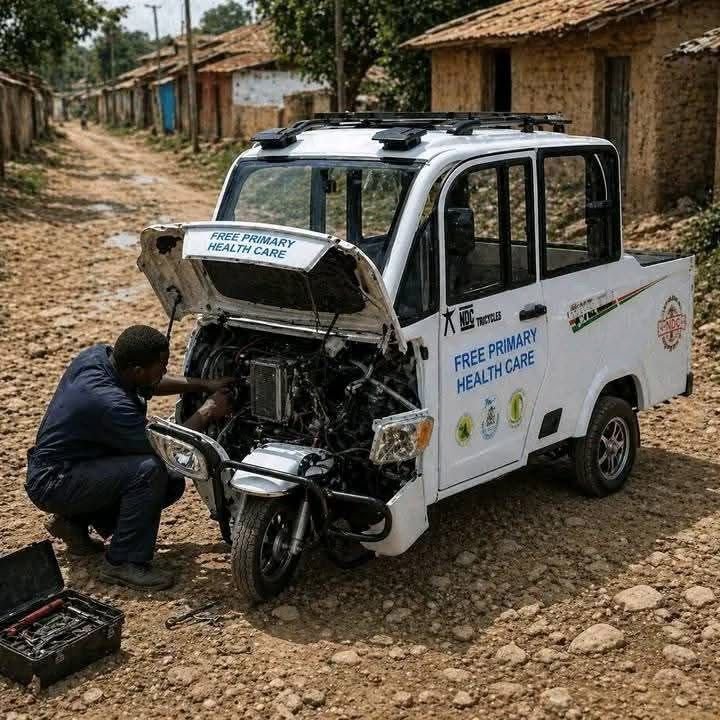
Both analyses agree that the image first appeared on April 28, 2026, and that forensic tools identified it as AI‑generated. The critical perspective highlights coordinated publication and political timing as signs of manipulation, while the supportive perspective emphasizes the neutral, evidence‑driven presentation and lack of emotive language. Weighing the coordinated dissemination against the fact‑checking rigor suggests a moderate level of manipulation, higher than the original 22.3 score but lower than the critical view’s 48 suggestion.
Key Points
- The image’s earliest known appearance and AI‑generation score are corroborated by both perspectives.
- Multiple outlets published near‑identical wording within hours, indicating possible coordinated messaging.
- The tone and methodology of the piece are largely neutral and follow standard fact‑checking practices.
- The political group "NPP 2028" could benefit from criticism of the government, raising a potential bias.
- Overall manipulation signals are present but are tempered by the transparent forensic analysis.
Further Investigation
- Obtain publishing timestamps and editorial notes from the other outlets to confirm whether they independently fact‑checked or simply syndicated the piece.
- Analyze the ownership and editorial policies of the Facebook group "NPP 2028" to assess its political motivations.
- Compare the phrasing of the headline and body text with other fact‑checking articles from the same outlet to determine if the style is typical or unusually sensational.
The content exhibits coordinated dissemination, strategic timing, and selective framing that suggest manipulation aimed at undermining Ghana's new health initiative, though it lacks strong emotional or overtly deceptive language.
Key Points
- Uniform wording across multiple outlets points to coordinated messaging
- The image first appeared days after the policy launch, implying timing chosen to cast doubt
- The source group “NPP 2028” is a political organization that could benefit from criticism of the incumbent government
- Framing language such as “viral” and the headline “Verdict: Fake, AI Generated” amplifies perceived importance
- The piece omits broader context about the health program’s performance, focusing narrowly on the debunked image
Evidence
- "earliest known publication (April 28, 2026) of the image originated from a Facebook group identified as ‘NPP 2028’"
- "Multiple outlets (Starrfm.com.gh, GhanaWeb, several Twitter accounts) published the same image and almost identical wording within hours, indicating coordinated messaging"
- "The image surfaced on April 28, 2026, shortly after the government launched the Free Primary Healthcare policy on April 15, 2026, suggesting the timing was chosen to cast doubt on the new program"
- "Verdict: Fake, AI Generated" (headline framing)
- "While the fact‑check details the image’s falseness, it omits broader context about the actual performance of the Free Primary Healthcare program"
The piece follows standard fact‑checking conventions: it cites specific forensic methods, provides dates and traceable sources, and maintains a neutral, evidence‑driven tone without emotive language.
Key Points
- Explicit use of verifiable tools (Google reverse‑image search and SightEngine) with concrete results.
- Clear attribution of author, organization (EIB Research) and publishing outlet (Starrfm.com.gh).
- Neutral language and focus on technical details rather than political rhetoric.
- Inclusion of concrete timestamps (April 28 2026) that allow independent verification.
- Absence of sensational claims or calls to action, indicating an informational rather than manipulative intent.
Evidence
- “According to a Google reverse image search, the earliest known publication (April 28, 2026) of the image originated from a Facebook group identified as ‘NPP 2028’.”
- “The analysis returned a 93% score that the image is generated using artificial intelligence, and indicated a high likelihood that the visual is synthetic.”
- “By: Isaac Azumah Abilla (EIB Research, Fact‑check and Investigative Desk)/Starrfm.com.gh.”