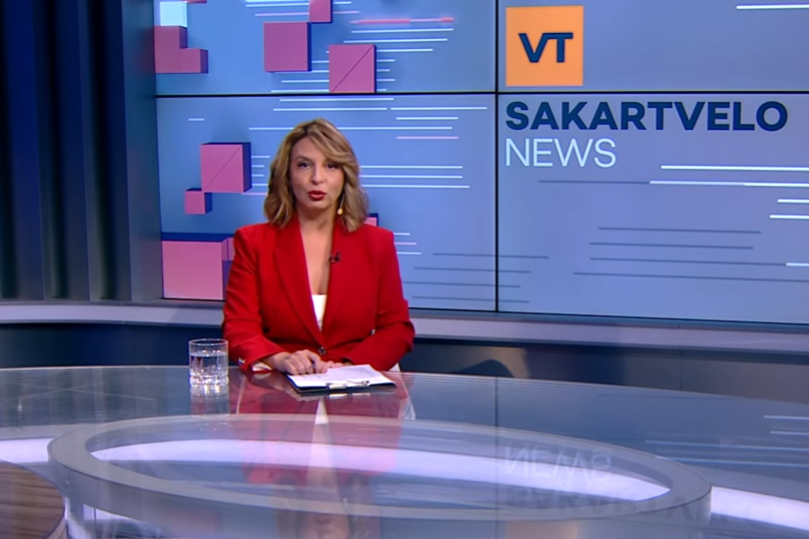
Both analyses agree the article contains verifiable facts and quotes, but they diverge on the extent to which framing and omission shape perception. The critical perspective highlights selective framing, timing, and missing funding details as signs of manipulation, while the supportive perspective emphasizes the presence of multiple sources and balanced coverage as evidence of credibility. Weighing the evidence suggests some bias exists, though not to the degree of overt propaganda.
Key Points
- The piece provides concrete details (launch date, quotes, EU context) supporting authenticity.
- Consistent language ('free and balanced speech', 'expose Russian disinformation') and omission of TVP funding hint at strategic framing.
- Timing of the launch near EU events could be both newsworthy and opportunistic, requiring further scrutiny.
- Both perspectives note the inclusion of critical reactions from Imedi, indicating an attempt at balance.
- Overall, the article shows mixed signals: factual reporting alongside subtle bias.
Further Investigation
- Obtain transparency reports on TVP’s funding and any Polish government support for the Georgian service.
- Compare the article’s language with other coverage of the launch to assess coordination of phrasing.
- Analyze audience reception and any subsequent shifts in public discourse in Georgia following the launch.
The piece frames the new TVP Georgian service as a neutral, pro‑EU voice while casting Russian influence and the Georgian ruling party’s media as biased, using selective framing, timing cues, and omitted context to subtly shape perception.
Key Points
- Framing bias presents TVP as a ‘free and balanced’ alternative and depicts Russian disinformation as a threat, while labeling Imedi as a mouthpiece of the ruling party.
- The launch timing is linked to upcoming EU events and recent Georgian protests, suggesting strategic positioning to influence diplomatic discourse.
- Uniform phrasing (‘free and balanced speech’, ‘expose Russian disinformation’) appears across multiple outlets, indicating coordinated messaging.
- Missing details about TVP’s funding and Poland’s political motives obscure potential state‑driven soft‑power objectives.
- Tribal division is reinforced by contrasting ‘unique voice for Georgia from the EU’ with Imedi’s portrayal as a regime propagandist, creating an us‑vs‑them narrative.
Evidence
- "We resist propaganda and offer you objective information" – TVP’s self‑description frames the service as unbiased while implying others are propaganda.
- "Building yet another bridge is fundamentally important..." – language that casts the service as a necessary connection to the EU.
- "Imedi...has become Georgian Dream’s most influential mouthpiece" – asymmetric labeling that delegitimizes the domestic outlet.
- The article notes the launch occurred "just before the EU summit on Eastern Partnership and after recent Georgian protests," hinting at strategic timing.
- Repeated use of phrases like "free and balanced speech" and "expose Russian disinformation" across TVP statements and social media posts.
The article presents verifiable details, quotes multiple stakeholders, and provides contextual background without sensational language, indicating a legitimate news communication. It balances positive framing of the new service with criticism from a pro‑government outlet, suggesting an effort toward balanced reporting.
Key Points
- Inclusion of direct quotes from TVP journalists, the new service’s hosts, and a competing Georgian channel (Imedi)
- Specific factual information such as launch date, platform distribution, and related EU‑Georgia diplomatic context
- Acknowledgment of controversy (the simulated Qronika incident) and its aftermath, showing no attempt to hide negative aspects
Evidence
- "The Georgian‑language news service of Poland’s Public Broadcaster (TVP) has begun its operations..." – concrete opening statement with date and purpose
- Quotes from Natia Koberidze, Sophio Natsvlishvili, and Rati Mujiri describing the service’s goals and EU alignment
- Imedi’s critical reaction is reported, including its description of Koberidze as a ‘propagandist of the regime’ and the note about the simulated Qronika episode