Both analyses agree the piece is a fact‑check that references an official denial from the Iranian Embassy, but they differ on the degree of manipulation. The critical perspective highlights emotionally charged wording and framing that could subtly sway readers, while the supportive perspective emphasizes the presence of a primary source and standard verification checks that point to credibility. Weighing the concrete embassy denial and verifiable details against the modest use of charged language leads to a conclusion that manipulation is present but limited.
Key Points
- The article cites a primary source—the Iranian Embassy in Islamabad—providing a strong factual anchor.
- Charged language such as "spread venom" and framing of an Iran‑Pakistan "us‑vs‑them" narrative introduces mild emotional manipulation.
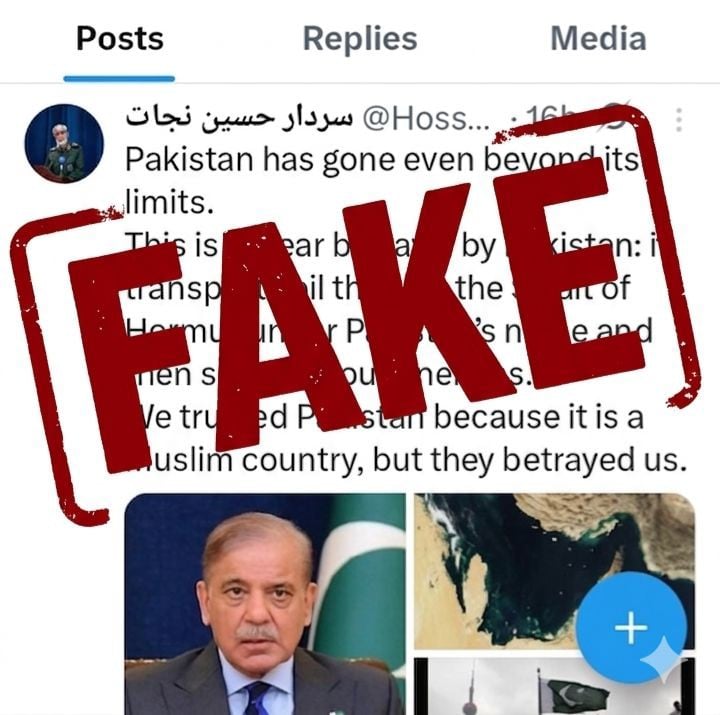
- Both perspectives note the presence of a bold "FAKE" stamp and lack of verification credentials, supporting the claim that the viral post is false.
- Reliance on a single authority is noted, but the authority is an official diplomatic entity, reducing the risk of appeal‑to‑authority bias.
- Overall, the evidence leans toward the content being a credible fact‑check with only modest manipulative cues.
Further Investigation
- Obtain the original statement from the Iranian Embassy (e.g., press release or verified social‑media post) to confirm wording and context.
- Identify the source of the viral screenshot to assess whether the "FAKE" stamp was added by a third party or the platform.
- Examine whether any other reputable news outlets reported the same denial to corroborate the embassy's response.
The article primarily serves as a fact‑check, but it employs charged language (e.g., “spread venom”) and frames the story as a binary conflict between Iran and Pakistan, which introduces modest emotional manipulation and tribal division cues.
Key Points
- Use of emotionally loaded terms (“venom”, “betrayal”, “provocative language”) to heighten perceived threat.
- Reliance on a single authority (the Iranian embassy) without independent verification, creating an appeal to authority.
- Framing the narrative as an us‑vs‑them clash (“brotherly and friendly relations” vs. “betrayal”), which can reinforce tribal division.
- Highlighting rapid spread and labeling the post as “FAKE” to invoke bandwagon and credibility heuristics.
- Absence of contextual details about the origin of the fake account, leaving gaps that may prompt speculation.
Evidence
- "spread venom in the brotherly and friendly relations of Iran and Pakistan"
- "The language used in the alleged post is inflammatory and uncharacteristic of official diplomatic communication"
- "The viral screenshot carries a bold “FAKE” stamp, reinforcing that it has already been flagged as misinformation"
- "The post ... quickly gained attention online and was widely circulated"
The article references an official denial from the Iranian Embassy, explains why the post fails standard verification criteria, and provides context about legitimate diplomatic communication channels, all of which are hallmarks of a legitimate informational piece.
Key Points
- Cites a primary source – the Iranian Embassy in Islamabad – as the authority confirming the post is fake.
- Applies standard disinformation checks (lack of verified account, inconsistent diplomatic tone, fake "FAKE" stamp) to assess authenticity.
- Describes the normal procedures for official statements (verified government accounts, state media, press releases), showing awareness of authentic communication norms.
- Encourages readers to rely on verified sources, indicating an educational rather than manipulative intent.
- Provides concrete observable details (screenshot, language analysis) that can be independently verified.
Evidence
- “The Embassy of Iran in Islamabad has categorically rejected the claim, stating that the account is fake… urging users to rely only on verified sources for official statements.”
- “A closer examination of the viral post reveals a flag and pictures of Prime Minister Shehbaz Sharif, but with the absence of verification credentials, inconsistent messaging, and language that deviates from the standard diplomatic tone.”
- “The viral screenshot carries a bold ‘FAKE’ stamp, reinforcing that it has already been flagged as misinformation.”
- “Official communications are typically issued through: Verified government accounts, State media, Formal press releases.”
- “No credible or official Iranian platform has issued any such statement, reinforcing the embassy’s position that the content is fabricated.”