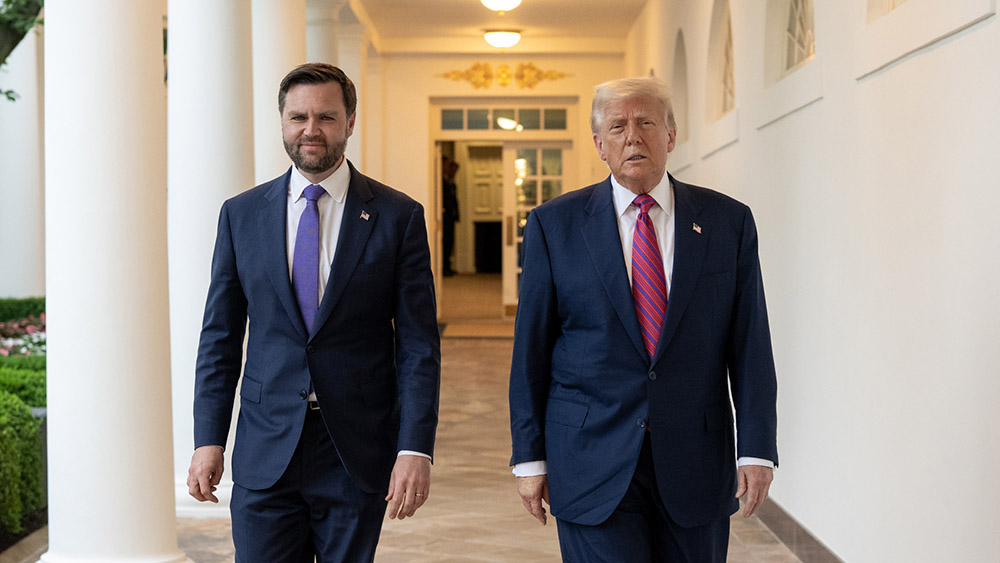
Both analyses acknowledge that the article contains verifiable details—specific dates, officials, and program names—but also note a pattern of emotionally charged language, selective statistics, and partisan framing. The critical perspective emphasizes manipulation through cherry‑picked fraud figures and tribal rhetoric, while the supportive perspective highlights concrete references that could be fact‑checked. Weighing the evidence, the article shows mixed credibility, suggesting moderate manipulation without outright fabrication.
Key Points
- The piece mixes traceable facts (e.g., State of the Union on Feb. 24, named officials) with unsubstantiated claims such as a $19 billion fraud estimate.
- Emotive and us‑vs‑them language (e.g., “war on fraud,” targeting Democratic states and Somali communities) aligns with manipulation patterns identified by the critical perspective.
- The lack of cited sources for key fraud numbers and the reliance on authority overload reduce confidence in the article’s overall credibility.
Further Investigation
- Locate the original source or transcript where the $19 billion fraud figure is presented to verify its basis.
- Check the claimed statements by Treasury Secretary Scott Bessent and DHS Secretary Kristi Noem for official press releases or recordings.
- Confirm the details of the "Feeding Our Future" case (court documents, DOJ press releases) to assess the article’s factual grounding.
The piece employs emotionally charged language, selective data, and tribal framing to portray a partisan "war on fraud" targeting Democratic states and specific ethnic communities, while presenting authority figures without substantive evidence.
Key Points
- Cherry‑picked figures (e.g., $19 billion fraud estimate) are presented without supporting evidence, creating a sense of urgency and magnitude.
- Tribal division is reinforced through us‑vs‑them language, repeatedly labeling Democratic‑led states as corrupt and linking fraud to immigrant and Somali communities.
- Authority overload is used by citing multiple officials (Trump, Vance, Treasury Secretary, DHS Secretary) to lend credibility, yet the claims lack verifiable data or independent sources.
- Emotive terminology such as "stolen resources," "deep state," and "exploited taxpayers" heightens anger and fear, while the narrative omits context about actual fraud investigations or baseline statistics.
Evidence
- "If we're able to find enough of that fraud, we will actually have a balanced budget," he asserted, though he did not provide detailed evidence for his $19 billion fraud estimate.
- "Trump has announced a sweeping \"war on fraud\" targeting blue states" and later references "Somali American communities of engaging in large‑scale fraud schemes".
- Multiple authority citations: "Treasury Secretary Scott Bessent confirmed enhanced monitoring..."; "Homeland Security Secretary Kristi Noem announced probes..."; "Centers for Medicare and Medicaid Services Administrator Dr. Mehmet Oz alleged..."
- Loaded framing: "exposing Deep State financial abuses and holding elites accountable"; "reclaim stolen resources for American taxpayers".
The article includes several hallmarks of legitimate communication, such as specific references to public events, named officials, and identifiable government programs, but these are interwoven with vague claims, unverified figures, and partisan framing that undermine its overall credibility.
Key Points
- Mentions concrete settings (State of the Union address on Feb. 24) and real officials (Vice President J.D. Vance, Treasury Secretary Scott Bessent, Gov. Tim Walz).
- Cites actual government initiatives (e.g., the "Feeding Our Future" COVID‑19 relief fraud case) that can be independently verified.
- Provides specific dates, program names, and media appearances (Fox News "America's Newsroom" on Feb. 25), which are traceable details.
- Uses direct quotations attributed to public figures, allowing fact‑checking of the quoted language.
- References multiple agencies (DOJ, Treasury, CMS) rather than a single source, suggesting a broader institutional context.
Evidence
- "President Donald Trump has announced... during his State of the Union address on Tuesday, Feb. 24."
- "Vance elaborated on his role during an appearance on the Fox News program \"America's Newsroom\" on Wednesday, Feb. 25.
- Reference to the "Feeding Our Future" case with 57 defendants convicted in a $300 million COVID‑19 relief fraud scheme.