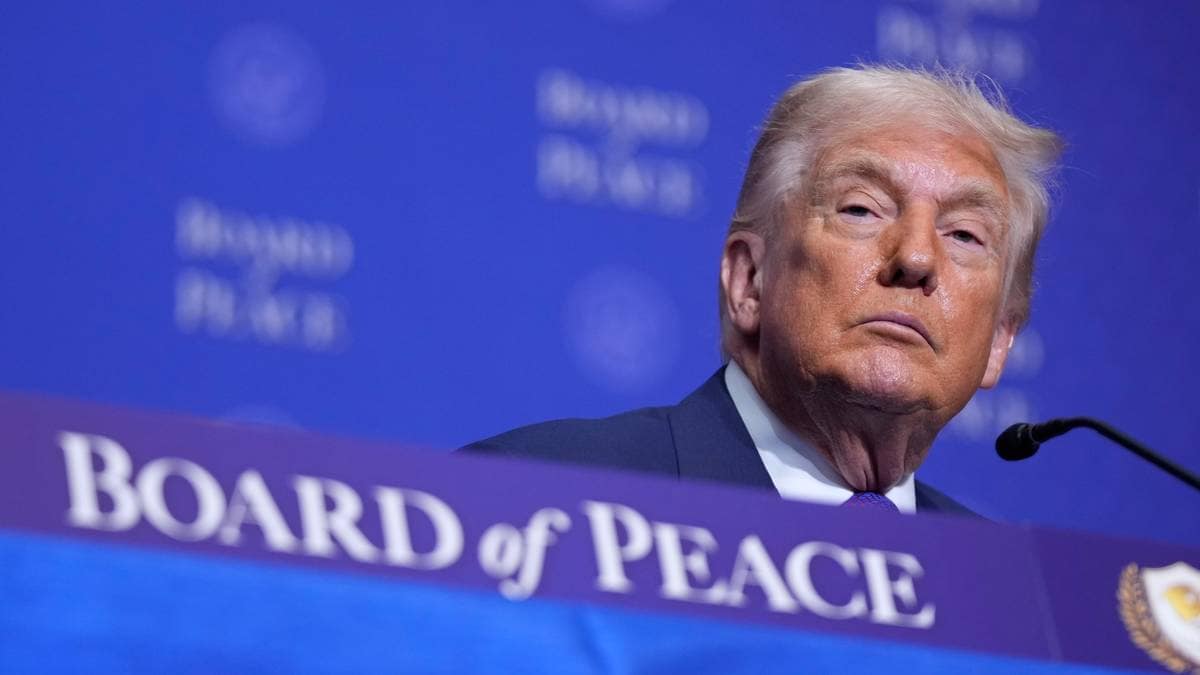
Both analyses agree the article cites official Norwegian sources denying a Trump‑led "Board of Peace" meeting, but the critical perspective highlights a likely fabricated Trump quote, sensational framing, and vague authority references. The supportive view emphasizes the presence of named officials and lack of urgent appeals. Weighing the concrete denial against the unverified Trump statement leads to a moderate assessment of manipulation.
Key Points
- The article includes a direct denial from the Norwegian Foreign Ministry, which is strong evidence against the existence of the claimed peace council.
- A quoted Trump statement appears implausible and lacks any verifiable source, suggesting possible fabrication.
- The piece mixes legitimate official references with sensational language (e.g., "historisk", "høy prislapp"), creating a mixed credibility profile.
- Both perspectives note the absence of overt calls to action, indicating the article is not overtly mobilizing readers.
- Verification of the Trump quote and the existence of the "Board of Peace" is essential to resolve the credibility gap.
Further Investigation
- Search for any official statement or press release from Donald Trump or his communications team containing the quoted remark.
- Verify the existence of a "Board of Peace" organization linked to Trump through reputable news outlets or official registries.
- Confirm the identities and roles of "general Jasper Jeffers" and the context of the quoted spokesperson to assess source credibility.
The article blends fabricated Trump statements with official denials, uses sensational framing and selective facts, and relies on vague authority citations, suggesting purposeful manipulation to shape perception of a non‑existent "peace council."
Key Points
- Fabricated Trump quote and humorous claim are presented without verification, creating a hook that draws attention.
- Appeal to authority is evident by portraying Trump’s self‑appointed "Board of Peace" as legitimate despite lack of credible sources.
- Selective mention of a few countries offering troops omits broader context, skewing perceived support.
- Framing language such as "historisk" and "høy prislapp" frames the council as grandiose or exploitative, influencing reader sentiment.
- Agency is obscured through vague sources (press spokesperson Ane Jørem, "general Jasper Jeffers"), making it unclear who is responsible for the statements.
Evidence
- "Da jeg så meldingen, trodde jeg Norge skulle gi meg fredsprisen. Men dette er litt mindre spennende, sier Trump."
- "Det vil ikke bli organisert et Board of Peace‑møte i Norge, sier pressetalsperson Ane Jørem til NRK."
- "Fem land tilbød under møtet å stille med tropper, nemlig Indonesia, Marokko, Kasakhstan, Kosova og Albania."
- "Medlemskap i Trumps fredsråd har en høy prislapp: Land som slutter seg til, må betale om lag 10 milliarder norske kroner."
- "Han er selv innstilt som leder på livstid."
The article contains several hallmarks of legitimate reporting, such as named official sources, direct quotations, and a corrective statement from the Norwegian Foreign Ministry, without any overt calls to action or sensational language.
Key Points
- Specific Norwegian officials (press spokesperson Ane Jørem, Foreign Minister Espen Barth Eide, Prime Minister Jonas Gahr Støre) are named and quoted.
- The piece includes a clear rebuttal from the Norwegian Foreign Ministry that disproves the initial Trump claim.
- No urgent or emotional appeals are present; the tone remains factual and descriptive.
- References to established institutions (NRK, NTB) and concrete details (AHLC founding year, proposed 10 billion‑krone fee) are provided.
Evidence
- “pressetalsperson Ane Jørem til NRK” – a named spokesperson cited with a media outlet.
- "Det vil ikke bli organisert et Board of Peace‑møte i Norge, sier pressetalsperson Ane Jørem til NRK." – direct denial from an official source.
- “Det bekrefter utenriksminister Espen Barth Eide (Ap) overfor NRK.” – another official confirmation.
- Absence of any request for readers to sign petitions, donate, or take immediate action.