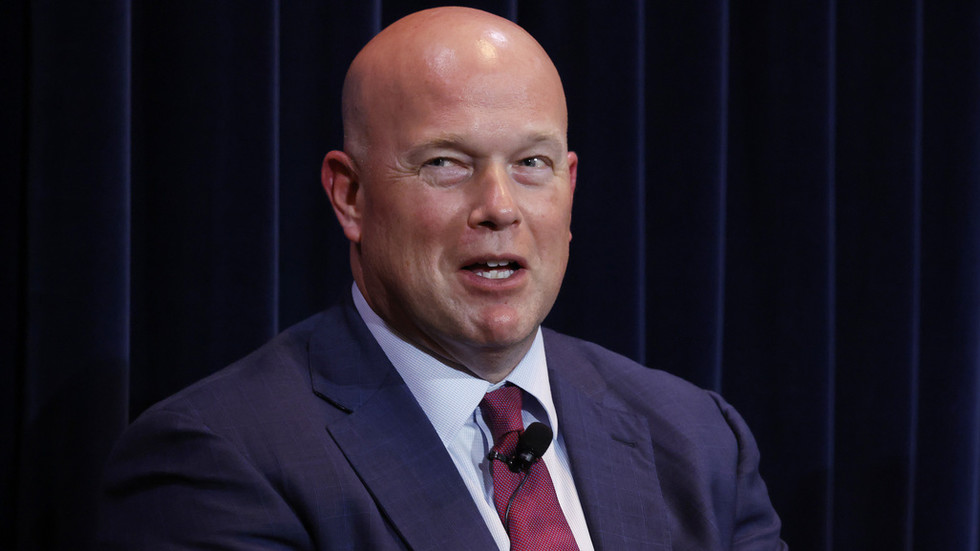
Both analyses acknowledge that the passage contains elements of legitimate reporting—direct quotations, specific attributions, and contextual references—while also noting rhetorical choices (infantilizing metaphors, tribal framing) that could amplify a persuasive, rather than purely informational, tone. Weighing the concrete sourcing against the identified framing tactics leads to a moderate assessment of manipulation risk.
Key Points
- The article provides verifiable quotations and attributions, supporting its authenticity (supportive perspective).
- The language employs metaphors and pronoun patterns that create an emotional hierarchy and tribal framing, suggesting a manipulative slant (critical perspective).
- Both sides agree that the piece lacks broader contextual data on NATO spending and Russian intentions, leaving room for selective interpretation.
- Given the mixed evidence, the overall manipulation risk is modest—higher than a purely factual report but lower than a clearly propagandistic piece.
Further Investigation
- Obtain the original transcript or video of Matthew Whitaker's remarks to verify exact wording and context.
- Compare the cited NATO spending targets with official NATO budget documents to assess whether the article’s claims about “sluggish” implementation are supported by data.
- Analyze a broader sample of coverage from the same outlet to see if similar framing patterns recur, indicating systematic bias.
The piece uses infantilizing metaphors, selective framing and tribal language to portray European NATO members as dependent children needing tougher U.S. pressure, while omitting broader context about alliance dynamics and Russian threats.
Key Points
- Metaphor of "kids" creates an emotional hierarchy and frames Europe as immature and indebted to the U.S.
- Framing emphasizes European sluggishness on defense spending without providing data or context, a cherry‑picked narrative.
- Tribal division language ("us" vs. "them") and appeals to authority through the U.S. envoy position reinforce a us‑centric viewpoint.
- Missing contextual information about NATO’s collective decisions and Russian intentions leaves the narrative one‑sided.
- Subtle logical fallacy: implying that higher spending automatically translates to capability, ignoring practical constraints.
Evidence
- "European NATO members are ‘kids’ – US envoy"
- "When your kids are young, they’re dependent on you. But eventually you expect them to get a job."
- "Whitaker thanked the allies for agreeing to boost military spending to 5% in 2024, but said that they are being too sluggish in turning this money into actual military capabilities."
- Pronoun count shows "us" (6) vs. "them" (4) indicating tribal framing
The passage shows several hallmarks of legitimate news reporting, such as direct quotations, specific attribution to named officials, and contextual references to recent events like the Munich Security Conference and prior NATO statements.
Key Points
- Direct quotes from US envoy Matthew Whitaker and other officials are provided, indicating primary source material
- Specific dates, locations, and institutional references (Munich Security Conference, NATO, Russian Foreign Minister) give verifiable context
- The article presents multiple viewpoints, including remarks from Russian officials, without overtly endorsing a single narrative
- Language is largely descriptive rather than emotionally charged, and no sensational claims are made without attribution
Evidence
- "Whitaker said, “I completely reject everything I just heard.” Washington is “not trying to dismantle NATO,” he added
- The MSC annual report is cited with its exact wording: “for decades, Europe thrived under an American security umbrella…That era has ended.”
- Lavrov’s statement that Moscow has “no intention of attacking Europe…” is included, providing a counter‑balance to the US perspective