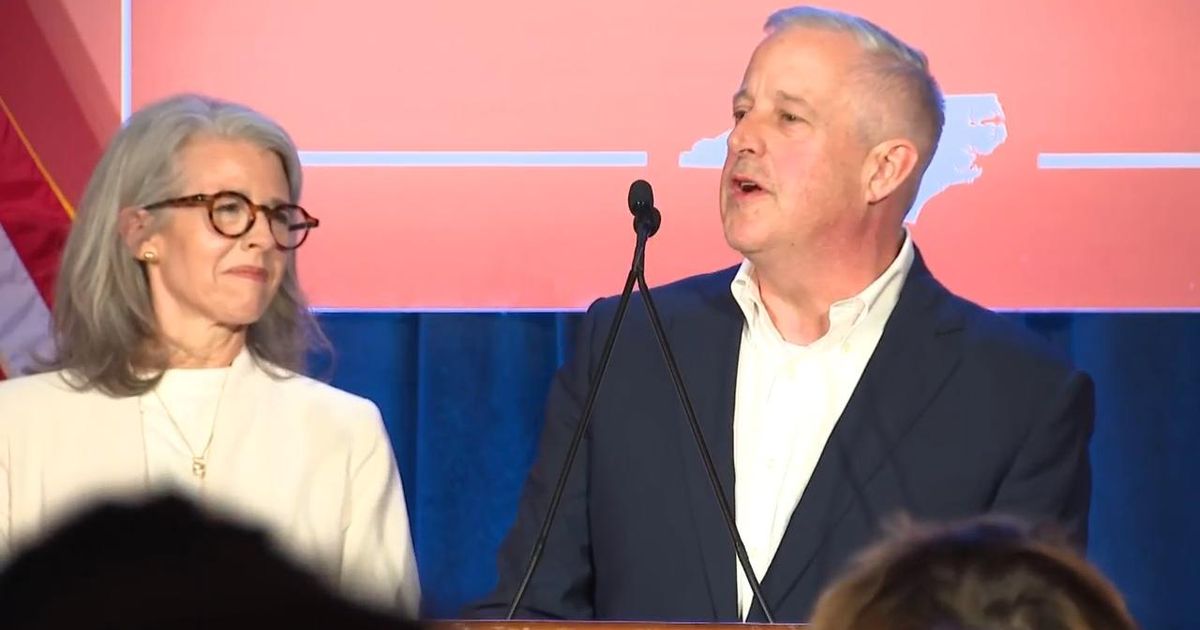
Both analyses agree the article reports factual details about the scandal involving Michael Whatley and Harvey L. West Jr., but they differ on how the presentation influences readers. The critical perspective highlights selective emphasis, framing language, and omitted context that could bias perception against the GOP candidate, while the supportive perspective points to multiple independent sources, balanced quotations, and a neutral tone that suggest standard journalistic practice. Weighing the evidence, the article shows some signs of framing yet also meets many credibility criteria, leading to a modest manipulation rating.
Key Points
- The article includes verifiable facts and quotes from multiple parties, supporting the supportive perspective’s claim of balanced sourcing.
- Framing language (e.g., "convicted sex offender") and the focus on the scandal without comparable coverage of the candidate’s policies suggest selective emphasis noted by the critical perspective.
- The omission of broader context about Michael Whatley’s platform and the Democratic opponent creates an attribution asymmetry, a legitimate concern for manipulation.
- No explicit calls to action or overtly sensational language are present, aligning with the supportive view of neutral intent.
Further Investigation
- Obtain the full article text to quantify the frequency of emotive versus neutral language.
- Compare coverage of the Democratic nominee and Michael Whatley's policy positions to assess attribution balance.
- Verify the timing of publication relative to the GOP nomination and any coordinated messaging campaigns.
The article largely reports factual details about the controversy but uses selective emphasis, framing language, and omission of broader context that can subtly steer reader perception against the GOP candidate.
Key Points
- Selective emphasis on the convicted sex offender scandal without providing comparable detail on the candidate's policies or the Democratic opponent's record.
- Framing language (e.g., "convicted sex offender," "disgusting Republicans") that can evoke moral outrage and tribal division.
- Attribution asymmetry: extensive description of West’s crimes and quotes, while the Democratic nominee is mentioned only in passing.
- Missing broader context about Michael Whatley’s platform, voting record, or other qualifications, leaving the scandal as the dominant narrative.
- Timing of the story immediately after Whatley secured the GOP nomination, which can influence voter impressions at a critical moment.
Evidence
- "U.S. Senate candidate Michael Whatley faces questions about whether he elevated a convicted sex offender to positions within the North Carolina Republican Party..."
- "Harvey L. West Jr., 55, pleaded guilty in 2000 to five counts of taking indecent liberties with a child..."
- "Fiedler acknowledged that it 'isn’t correct' to say Whatley appointed West as the district committee’s chairman. However, Fiedler stood by his reporting that Whatley 'supported' West in the position.'"
- "The article omits broader context such as Whatley’s own voting record or policy positions, focusing narrowly on the West controversy."
- "The story was published shortly after Whatley won the GOP nomination, positioning the scandal at a pivotal point in the campaign."
The article follows standard journalistic practice: it cites multiple independent sources, presents statements from all involved parties, and avoids calls to immediate action or overtly emotive language. The narrative includes contextual background and acknowledges uncertainty, which are hallmarks of legitimate reporting.
Key Points
- Multiple verifiable sources are referenced (Associated Press, PolitiFact, Asheville Watchdog, party officials).
- Both sides of the controversy are quoted, giving the candidate, the accused, and party representatives equal airtime.
- The piece provides concrete factual details (dates, positions, criminal record) without exaggeration or sensationalism.
- No urgent‑action framing or coordinated messaging is evident; the language remains neutral and descriptive.
Evidence
- Citation of AP reporting on Harvey L. West Jr.'s 2000 guilty plea and his 2012 statements.
- Inclusion of PolitiFact’s request for comment and West’s own phone interview explaining his resignation.
- Quotes from GOP spokesman Matt Mercer and Asheville Watchdog reporter Tom Fiedler, showing divergent perspectives.
- Absence of calls to vote, donate, or otherwise mobilize readers, indicating a purely informational intent.