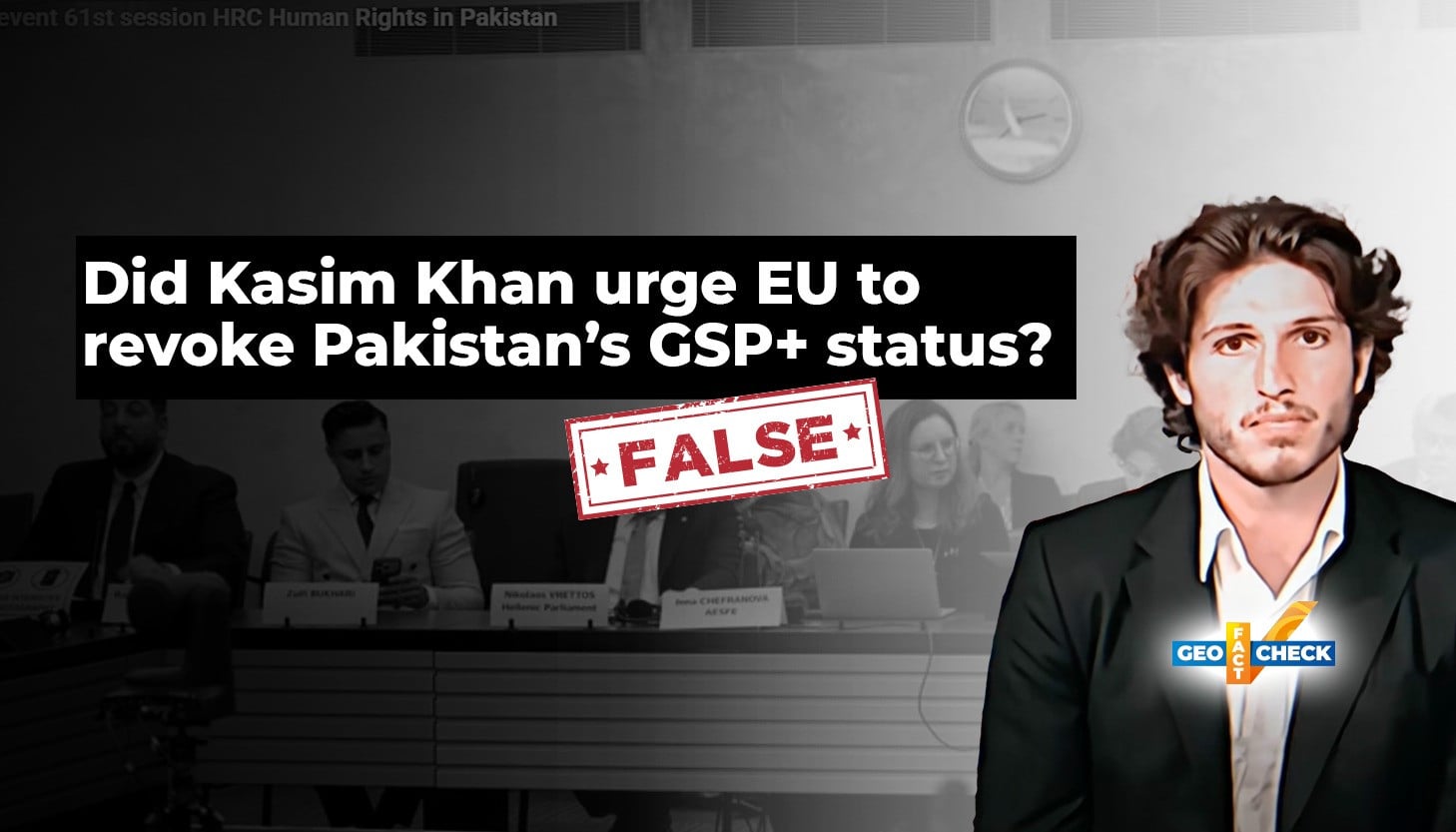
Both analyses agree that the piece addresses a false rumor about Pakistan's GSP+ status, but they differ in emphasis: the critical perspective highlights rhetorical cues that could amplify emotional responses and partisan framing, while the supportive perspective points to concrete primary evidence, transparent methodology, and neutral language that bolster the fact‑check’s credibility. Weighing the strong verifiable evidence against the noted framing techniques suggests the content is largely credible, with only moderate manipulation cues.
Key Points
- The fact‑check provides timestamped video evidence and direct quotations, which strongly support its factual claims (supportive perspective).
- The article uses emotionally charged language and mirrors the rumor’s framing, which could reinforce sensational narratives despite its corrective intent (critical perspective).
- Both perspectives note the inclusion of statements from political figures, but the supportive view frames this as balanced context, whereas the critical view sees it as a bandwagon effect.
- Overall, the evidentiary foundation outweighs the rhetorical concerns, indicating lower overall manipulation.
- A modest increase in the manipulation score from the original assessment is warranted to reflect the identified framing cues.
Further Investigation
- Obtain the full, unedited UN Human Rights Council video to confirm that no additional statements about GSP+ were made beyond those cited.
- Analyze the distribution network of the original rumor (social media platforms, influencers) to gauge the extent of its reach and potential impact.
- Compare the fact‑check’s language with a broader sample of fact‑checks on similar topics to assess whether mirroring rumor phrasing is a common pattern.
The piece exhibits several manipulation cues: it highlights emotionally charged statements, amplifies partisan criticism, and frames the false claim as a coordinated attack while providing limited broader context about the GSP+ scheme.
Key Points
- Emotional language is repeated, especially in Kasim Khan's quoted speech describing his father's imprisonment, which heightens affective response.
- The article leans on authority figures (defence minister, MP) to legitimize the false claim, creating a bandwagon effect and tribal division between the ruling party and the Khan family.
- Framing techniques portray the original rumor as a malicious “direct attack on the country's economy,” positioning the fact‑check as a corrective against a coordinated narrative.
- Context about the economic importance of GSP+ for Pakistan is largely omitted, leaving readers without a full picture of why the claim matters.
- The fact‑check itself mirrors the language of the original rumor (e.g., “propaganda,” “direct attack”), which can reinforce the sensational framing even while debunking it.
Evidence
- "Imran Khan's son, Kasim Khan, attends a conference to revoke Pakistan's GSP+ status..." – the sensational caption that sparked the rumor.
- "If [the] sons are so concerned about their father, instead of lobbying for revocation of GSP+ status, they should demonstrate their love and commitment, travel to Pakistan to visit him." – defence minister’s emotive appeal.
- "direct attack on the country's economy" – phrasing used by the ruling‑party MP to cast the claim as an economic assault.
- The fact‑check repeats the emotionally charged excerpt from Kasim Khan’s speech: "He is held in a solitary confinement cell, a cell built for death row inmates... a deliberate persecution designed to strip a human being of his dignity."
- No detailed explanation of GSP+ benefits or stakes is provided, despite the claim’s focus on economic impact.
The piece follows standard fact‑check conventions: it cites primary source recordings with timestamps, provides verbatim excerpts, and maintains a neutral tone without urging action. It also acknowledges opposing statements from officials, showing balanced coverage.
Key Points
- Uses verifiable primary evidence (UN Web TV video, timestamps, official X post).
- Presents direct quotations from Kasim Khan's speech and from officials, allowing readers to compare claims.
- Transparent methodology: describes how the full three‑hour session was reviewed and links to the exact video segments.
- Neutral language and no call‑to‑action; the goal is correction, not persuasion.
- Acknowledges the political context (quotes from defence minister and MP) while keeping focus on the factual claim.
Evidence
- Timestamped reference to the UN Human Rights Council session (18:00) where Kasim Khan's speech is heard.
- Link to the side‑event video (26:00) that shows his only comment on GSP+.
- Citation of Kasim Khan’s own X post confirming support for continuation of GSP+ status.
- Inclusion of statements from Pakistan's defence minister and a ruling‑party MP, showing the claim’s propagation.
- Explicit statement that the circulating video was spliced, indicating awareness of manipulation attempts.