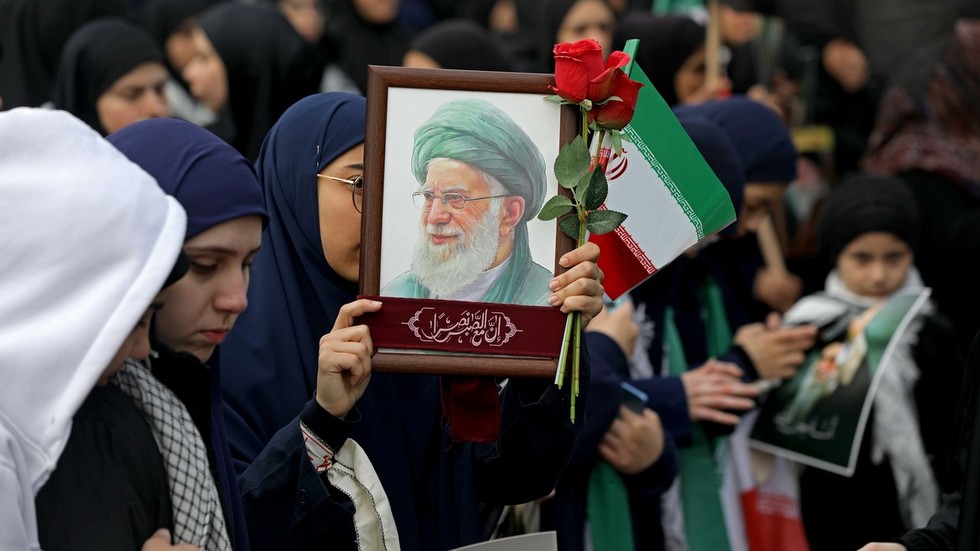
Both the critical perspective and the supportive perspective identify the same core concerns: the article depends almost entirely on Russian and Iranian official statements, offers no independent verification of the extraordinary claim that Iran’s supreme leader was killed, and uses emotionally charged, us‑vs‑them language that heightens tribal sentiment. Because the evidence for manipulation is corroborated across both analyses, the content should be rated as highly suspicious.
Key Points
- Both analyses agree the piece relies exclusively on Russian and Iranian official sources with no neutral verification.
- Emotionally loaded terminology (e.g., "outrage", "great crime", "political assassinations") is used throughout, amplifying anger and grief.
- The narrative presents a stark aggressor‑victim dichotomy, omitting broader context or alternative viewpoints.
- The extraordinary claim of Khamenei’s death is presented without corroborating evidence, a red flag for propaganda.
- Calls for urgent de‑escalation are framed as moral authority, subtly urging alignment with the cited governments.
Further Investigation
- Obtain independent confirmation (e.g., from reputable international news agencies or on‑the‑ground reporters) of the reported death of Iran’s supreme leader.
- Identify any third‑party statements or analyses that address the incident and compare timelines.
- Examine whether other media outlets reported the same event and what evidence they provided.
The article employs emotionally charged language, relies heavily on Russian and Iranian official statements without independent verification, and frames the event as a stark us‑vs‑them conflict, all of which are classic manipulation cues.
Key Points
- Loaded terminology (e.g., "political assassinations," "great crime," "outrage and deep sorrow") heightens emotional response.
- Authority overload: the narrative is built almost exclusively on statements from the Russian Foreign Ministry and Iranian officials, lacking neutral or third‑party sources.
- Us‑vs‑them framing creates tribal division, positioning Russia/Iran as victims and the US/Israel as aggressors.
- Critical context is omitted—no independent confirmation of Khamenei’s death, no background on prior escalations, and no alternative viewpoints.
- Calls for urgent de‑escalation are presented as moral authority, subtly urging readers to align with the Russian diplomatic stance.
Evidence
- "The Russian Federation resolutely and consistently condemns the practice of political assassinations and the ‘hunting’ of leaders of sovereign states..."
- "Moscow met the news of Khamenei's death with ‘outrage and deep sorrow’"
- "the perpetrators and commanders of this great crime"
- "We call for urgent de‑escalation, a cessation of hostilities, and a return to the political and diplomatic process"
- The article cites only Tehran and Moscow for verification of the leader's death, with no independent or third‑party corroboration.
The article shows several hallmarks of inauthentic, propaganda‑style communication: it relies exclusively on partisan official statements, lacks independent verification of the core claim, uses emotionally charged language, and presents a binary us‑vs‑them narrative without nuance.
Key Points
- Only Russian and Iranian official sources are cited; no neutral or independent observers are referenced to confirm Khamenei's reported death.
- The core factual claim (the killing of Iran’s supreme leader) is extraordinary yet presented without corroborating evidence, which is a red flag for manipulation.
- Emotionally loaded terminology (e.g., "outrage", "great crime", "political assassinations") is repeated throughout, amplifying anger and grief.
- The narrative frames the event as a clear aggressor‑victim dichotomy, reinforcing tribal division and omitting any discussion of broader context or alternative viewpoints.
- Timing and placement of the story coincide with other Russia‑West tension news, suggesting opportunistic amplification rather than genuine reporting.
Evidence
- “The Russian Federation resolutely and consistently condemns the practice of political assassinations…" – reliance on a single government source.
- “Tehran confirmed early Sunday that the 86‑year‑old leader was killed…" – no third‑party verification or reputable news outlet cited.
- Repeated use of terms such as "outrage and deep sorrow", "great crime", and "blatantly violates" to create an emotionally charged narrative.