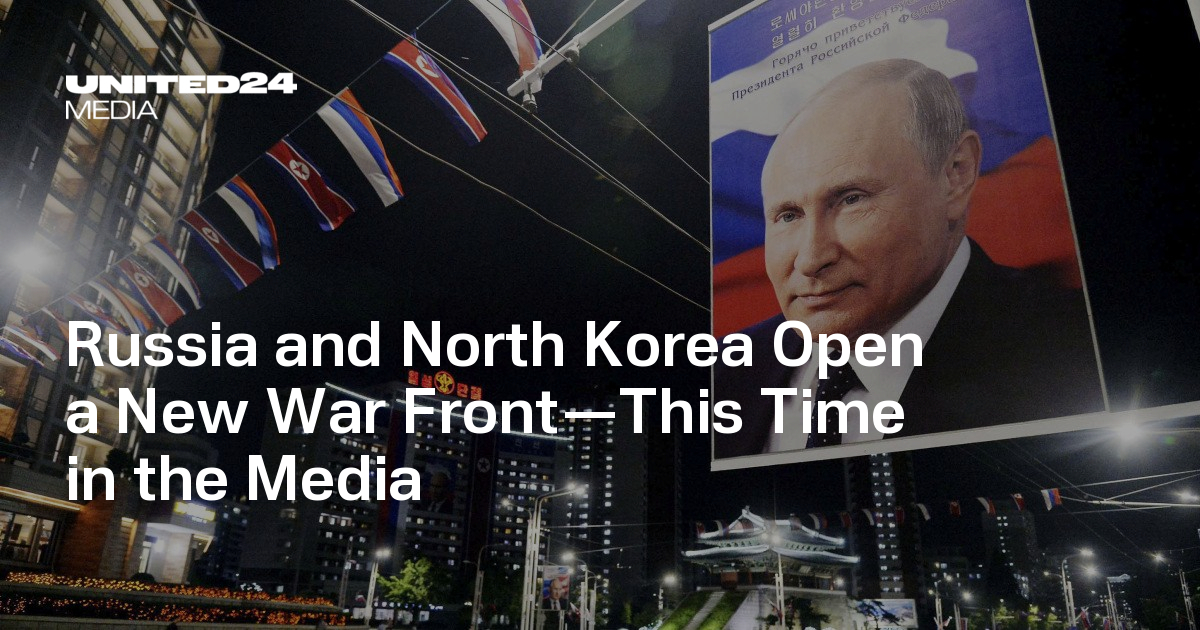
The article contains verifiable details such as dates, agency names, and a citation to The Times, which the supportive perspective cites as evidence of credibility. At the same time, the critical perspective highlights the use of emotionally charged, war‑like language, exclusive reliance on Russian and North Korean officials, and selective framing that suggest a persuasive agenda. Weighing both, the piece shows signs of both legitimate reporting and coordinated messaging, leading to a moderate assessment of manipulation.
Key Points
- Both perspectives agree the article includes concrete facts (e.g., March 28 agreement, TASS, KCNA, Reporters Without Borders rankings).
- The critical perspective identifies emotionally loaded phrasing and a one‑sided authority base as manipulation cues.
- The supportive perspective notes the presence of source attribution (The Times) and transparency about missing operational details, which temper concerns.
- The lack of independent or Western sources and the framing of the West as "enemies" increase the suspicion of bias.
- Overall, the evidence points to a mixed signal: credible factual scaffolding combined with persuasive framing.
Further Investigation
- Obtain independent reports (e.g., from Western media or NGOs) confirming the existence and content of the Russia‑North Korea media pact.
- Analyze the full text for additional context around the quoted statements to see if they are presented in a balanced manner.
- Check whether the cited Times article can be accessed and whether it contains the same language and details.
The article employs emotionally charged language, relies on state‑run authorities, and frames the Russia‑North Korea media pact as a moral battle against “modern Nazism,” creating an us‑vs‑them narrative while omitting operational details. These patterns point to coordinated persuasion rather than neutral reporting.
Key Points
- Emotional manipulation through war‑like and moralizing terms (e.g., “fight modern Nazism,” “many enemies”).
- Authority overload by quoting only Russian and North Korean officials to legitimize the pact.
- Framing and tribal division that casts the West as hostile “enemies” spreading “false narratives.”
- Selective use of press‑freedom rankings without broader context, creating a cherry‑picked picture.
- Omission of concrete details about how the media cooperation will function, leaving a vague, persuasive narrative.
Evidence
- "Everyone understands that today we are fighting modern Nazism together," Kondrashov said.
- "The agreement is based not only on long-term friendship, but also takes into account the completely new realities of today’s information war..."
- Reporters Without Borders ranked North Korea second‑to‑last ... Russia was ranked 171st out of 180 countries, reflecting tight restrictions on media and widespread censorship.
- "He also suggested that coordinated information campaigns are a response to external pressure, noting that both countries face opposition from ‘many enemies.’"
- The article provides no specifics on funding, editorial processes, or examples of joint content, stating only that “specific operational details remain unclear.”
The article includes verifiable specifics—dates, agency names, and press‑freedom rankings—and cites a reputable outlet (The Times), which are hallmarks of legitimate reporting. It presents quotes from officials without overtly urging readers to act, and it acknowledges gaps in operational detail, suggesting a balanced informational intent.
Key Points
- Concrete timestamps and named entities (e.g., March 28 agreement, TASS, KCNA) allow independent verification
- Direct quotations from officials are presented without embellishment or calls for immediate action
- The piece references external metrics (Reporters Without Borders 2025 index) that can be cross‑checked
- It notes the lack of operational specifics, indicating transparency about unknowns
- The source attribution to The Times provides a traceable publication trail
Evidence
- "The agreement, reported on March 31 by The Times..."
- "The new agreement, signed on March 28, includes provisions..."
- "Reporters Without Borders ranked North Korea second‑to‑last in its 2025 press freedom index..."