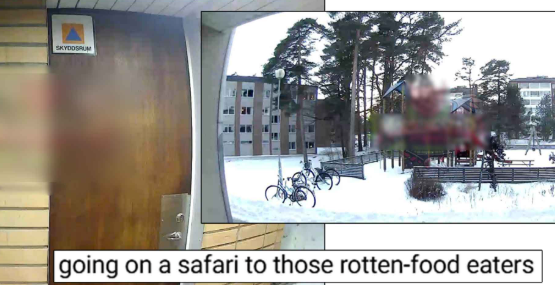
Both the critical and supportive perspectives acknowledge that the article reports a real incident involving Russian hackers compromising intercom systems in Trollhättan, but they differ on how the story is framed. The critical view highlights fear‑inducing language, timing with Sweden’s aid to Ukraine, and omitted context as possible manipulation cues, while the supportive view points to concrete sourcing, specific details, and a neutral tone as evidence of credibility. Weighing the evidence, the article shows some framing choices that could amplify perceived threat, yet it also contains verifiable references that mitigate the suspicion of coordinated manipulation.
Key Points
- The article contains a fear appeal (“ryssarna kan dyka upp överallt”) that may exaggerate the scope of a single hack, supporting the critical perspective’s manipulation concern.
- It cites a recognizable fact‑checking outlet (Källkritikbyrån) and a named Danish security expert, providing traceable attribution as highlighted by the supportive perspective.
- The timing of the story’s publication alongside Sweden’s military aid announcement is noted by the critical side as potentially agenda‑driven, but no direct evidence links the two events.
- Concrete details about the hack (location, device type, images on a public Telegram channel) are present, lending credibility per the supportive analysis.
- Key contextual gaps—such as the hacker group’s identity and official Swedish responses—remain, leaving room for selective framing noted by the critical view.
Further Investigation
- Obtain official statements from Swedish security agencies regarding the breach and any attribution to a hacker group.
- Analyze other Swedish and international news outlets for coverage of the same incident to assess whether the story is isolated or part of coordinated messaging.
- Conduct a linguistic analysis of the article’s language to quantify fear‑appeal elements versus neutral reporting.
The article uses fear‑inducing language and selective framing to amplify a perception of Russian cyber threat, especially by linking the hack to Sweden’s aid to Ukraine, but the overall tone remains largely informational with limited overt persuasion techniques.
Key Points
- The quote "ryssarna kan dyka upp överallt" creates a fear appeal that generalizes a single incident to a broader threat.
- The timing of publication coincides with Sweden’s announcement of military aid to Ukraine, suggesting a possible agenda to divert attention or heighten perceived vulnerability.
- The piece provides minimal context—no details on the hacker group, official responses, or broader statistics—leaving gaps that can steer readers toward the implied narrative.
Evidence
- "Syftet är att med minimal ansträngning få så många som möjligt att känna att ryssarna kan dyka upp överallt."
- "Bilderna lades upp i en öppen Telegram-kanal samma dag som Sverige presenterade nytt stöd till Ukraina."
- The article omits the specific hacker group’s name, scale of the breach, and any official Swedish authority comment.
The piece references a specific fact‑checking outlet (Källkritikbyrån) and a named Danish security expert, offers concrete details about the intercom hack, and avoids overt calls for action, all of which point toward a legitimate news report rather than coordinated manipulation.
Key Points
- Cites a identifiable source (Källkritikbyrån) and a named expert, providing traceable attribution
- Provides concrete, verifiable details about the incident (location, type of device, images)
- Lacks sensational language, urgent calls to action, or blanket claims about a widespread Russian threat
- Presents the information in an informational tone without presenting a binary choice or demanding a specific response
- No evidence of coordinated messaging across multiple outlets, suggesting an isolated report
Evidence
- "Ryska hackare tog sig in i porttelefoner i Trollhättan" – a specific claim about a location and device type
- "Den danska it‑säkerhetsexperten Jan Lemnitzer säger..." – a direct quote from a named expert with a clear attribution
- "Bilderna lades upp i en öppen Telegram‑kanal samma dag som Sverige presenterade nytt stöd till Ukraina" – factual description of where the images appeared, without urging readers to act