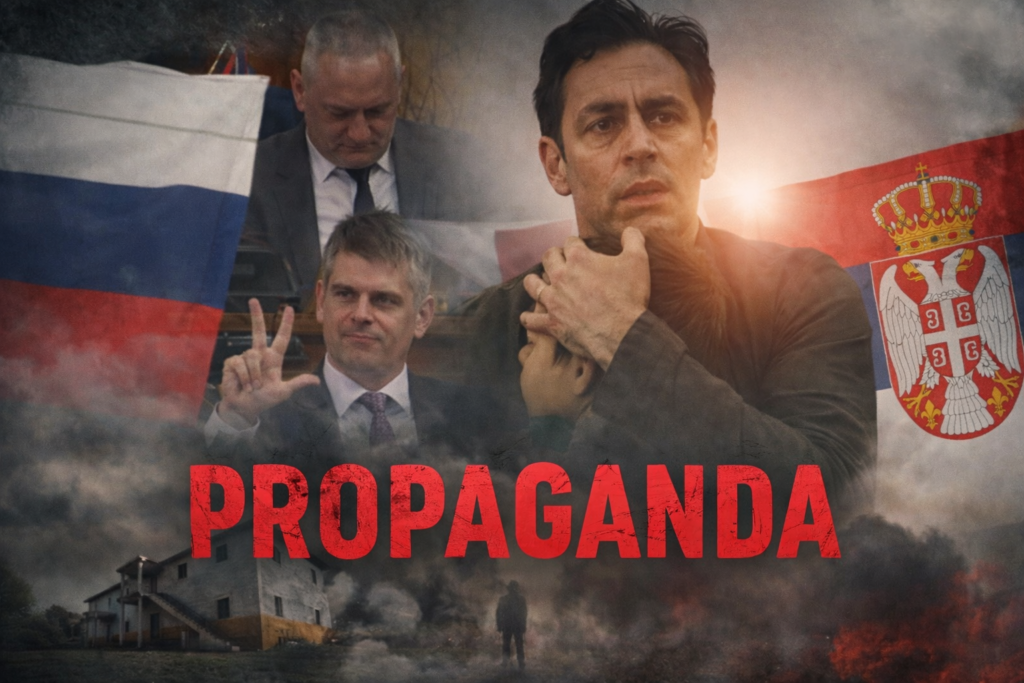
Both the critical and supportive perspectives agree that the article about the film “Harvest” cites a lack of legal verdict on organ‑trafficking claims and provides concrete details such as the film’s title, promoter Arno Gujon, and a Belgrade event. The critical view stresses the use of charged language, vague authority references, and a binary framing that suggest manipulation, while the supportive view highlights the presence of verifiable facts and a largely descriptive tone that point to an informational intent. Weighing the overlapping evidence, the content shows moderate signs of manipulation but also contains factual anchors, leading to a balanced assessment that leans toward a modest manipulation score.
Key Points
- Both perspectives note the absence of any court verdict confirming the organ‑trafficking allegations.
- The critical perspective highlights emotionally charged language and vague authority claims as manipulation cues.
- The supportive perspective points to verifiable specifics (film title, promoter, event location) indicating an informational purpose.
- The same quotations are used by both sides, making it difficult to privilege one interpretation over the other.
- Overall the content exhibits moderate manipulation indicators tempered by factual detail.
Further Investigation
- Verify the reported promotion event (date, venue, participants) through independent sources.
- Analyze the full text for tone and framing using linguistic tools to quantify charged language versus neutral description.
- Search for any judicial or tribunal findings related to the organ‑trafficking allegations to confirm the claim of no verdict.
The text employs charged language, vague authority claims, and selective framing to portray the film “Harvest” as a malicious, coordinated propaganda effort, creating a binary us‑vs‑them narrative and discouraging alternative viewpoints.
Key Points
- Uses emotionally loaded terms (e.g., “aggressive”, “manipulate perception”, “coordinated disinformation effort”) to evoke fear and anger
- Cites unnamed “well‑known disinformation method” and “strategic objective” without concrete sources, an appeal to authority
- Presents a false dilemma: the film is either truthful or outright propaganda, ignoring nuanced debate
- Omits context about the origins of organ‑trafficking allegations and alternative investigations, a selective omission tactic
- Applies attribution asymmetry by assigning malicious intent to Serbian/Russian actors while portraying critics as part of the disinformation network
Evidence
- "The film ‘Harvest’ represents a coordinated disinformation effort..."
- "It seeks to delegitimize Kosovo’s statehood... and cast doubt on the role of the United States and NATO..."
- "There is no court verdict supporting these accusations, no concrete and verifiable evidence..."
- "The strategic objective behind such productions is clear..."
- "In this context, the film stands as one of the more aggressive recent examples of coordinated Serbo‑Russian propaganda designed not to inform, but to manipulate perception."
The article includes several hallmarks of legitimate communication, such as referencing verifiable legal outcomes, providing concrete details about the film’s promotion, and avoiding direct calls for immediate action, which suggest an effort to inform rather than purely manipulate.
Key Points
- It cites the absence of any international court or tribunal verdict confirming the organ‑trafficking allegations, a verifiable factual claim.
- Specific, checkable information is given (film title “Harvest”, promoter Arno Gujon, promotion event in Belgrade, timing before Kosovo elections).
- The piece acknowledges the existence of investigations and political pressure, showing awareness of ongoing debate rather than presenting a single unquestioned narrative.
- Language is largely descriptive and does not contain explicit calls for urgent behavior, indicating an informational rather than coercive intent.
- Historical context is provided by linking the film to prior disinformation patterns, which can be cross‑referenced with known cases.
Evidence
- “The film ‘Harvest’ represents a coordinated disinformation effort…”, followed by a detailed list of the alleged claims and the statement that “no court verdict supporting these accusations” exists.
- “The promotion of the film ‘Harvest’ by Arno Gujon in Belgrade…”, offering a name, location, and event that can be independently verified.
- “There is no court verdict supporting these accusations, no concrete and verifiable evidence confirming such a network, and no credible basis for the scale and organization depicted.”