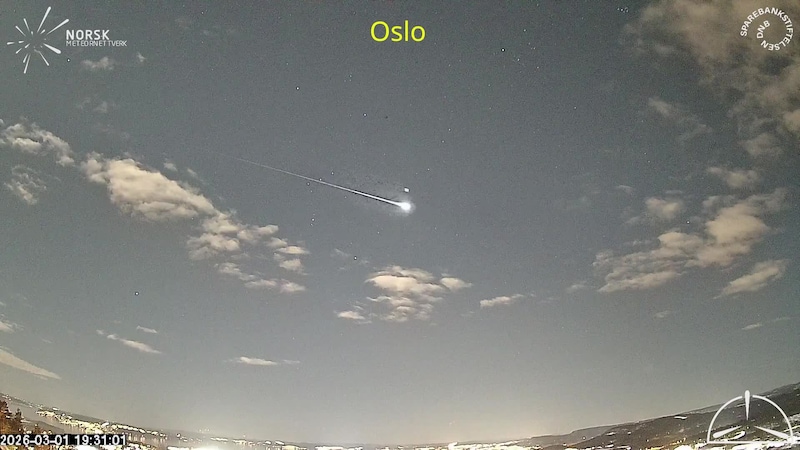
Both analyses agree the article is largely factual, citing a named expert and providing concrete observational data. The critical perspective notes mild enthusiastic wording and some omitted broader context, while the supportive perspective highlights the article’s neutral tone and verifiable details. Weighing the stronger evidential support for authenticity against the modest framing cues leads to a low manipulation score.
Key Points
- The article includes specific, verifiable data (speed, altitude, camera locations) and a direct quotation from an identified expert, which the supportive perspective cites as evidence of credibility.
- The critical perspective flags enthusiastic language such as “fryktelig spennende” and “skikkelig fin,” suggesting a mild positive framing bias but finds no overt emotional coercion or coordinated messaging.
- Both perspectives agree there are no calls to action, partisan framing, or hidden agendas, indicating the piece is primarily informational.
- The omission of broader context (e.g., rarity of such meteors) is noted by the critical side, while the supportive side views the focus on concrete details as appropriate for the genre.
- Overall, the modest framing cues do not outweigh the strong factual grounding, leading to a low manipulation rating.
Further Investigation
- Obtain additional expert commentary on the meteor’s rarity and scientific significance to address the contextual gaps noted by the critical perspective.
- Verify the original source of the article and any editorial standards of the publishing outlet to assess potential bias.
- Cross‑check the reported measurements with independent meteor monitoring databases for consistency.
The article shows only modest signs of manipulation, mainly mild enthusiastic framing and selective omission of technical details, without any overt emotional coercion or coordinated messaging.
Key Points
- Enthusiastic language (“fryktelig spennende”, “skikkelig fin”) frames the event positively rather than neutrally
- Specific quantitative details (speed, altitude, visibility) are presented while broader context such as frequency of similar meteors or scientific uncertainty is omitted
- No appeals to authority beyond a single expert, no calls to action, and no tribal or partisan framing are present
Evidence
- "fryktelig spennende" (terribly exciting)
- "skikkelig fin" (really nice)
- "Ifølge Meteornettverket dreide dette seg om en mindre romstein på noen få kilo som traff atmosfæren i 115 000 km/t" – precise figures are given, but size, composition and rarity are not discussed
The article displays several hallmarks of legitimate reporting: it cites a specific expert from a recognized meteor network, provides concrete observational data from multiple camera sites, and avoids any calls for urgent action or partisan framing.
Key Points
- Direct quotation of Morten Bilet, a named expert from Norsk meteornettverk, with no exaggerated credentials.
- Inclusion of verifiable details such as timestamps, camera locations (Oslo, Larvik, Moss, Trondheim), speed (115 000 km/h), altitude (58 km), and duration (9 seconds).
- Neutral tone focused on description; no emotional amplification, urgency cues, or appeals to authority beyond the single expert.
- Contextual consistency with typical meteor‑fireball reporting (e.g., reference to asteroid belt origin, age of the stone).
- Absence of hidden agendas: no political, financial, or ideological messaging, and no coordinated script across outlets.
Evidence
- Quote: “Dette var en stein fra asteroidebeltet mellom mars og Jupiter… Fire milliarder år gammel!” – provides expert commentary.
- Statement: “Meteoren var synlig på Norsk meteornettverk sine kameraer i Oslo, Larvik, Moss og Trondheim.” – multiple independent observation points.
- Data points: speed 115 000 km/t, altitude 58 km, visibility 9 sekunder – specific, measurable figures typical of scientific reporting.