Both the critical and supportive perspectives agree that the article relies heavily on official statements, lacks independent verification, and uses sensational language, especially around the implausible claim that U.S.-Israeli strikes killed Iran’s Supreme Leader. This convergence points to a high likelihood of manipulation, outweighing any superficial legitimacy cues, and suggests the content is largely suspicious.
Key Points
- Both analyses note the absence of independent corroboration for the embassy‑smoke incident and the Khamenei death claim
- Reliance on official sources (Iranian foreign minister, CENTCOM) without third‑party analysis creates an authority‑bias pattern
- Sensational, fear‑inducing language and binary us‑vs‑them framing are present, indicating manipulation tactics
- Chronological and factual inconsistencies (e.g., impossible death of the Supreme Leader) further erode credibility
Further Investigation
- Obtain independent eyewitness reports, satellite imagery, or reputable news agency confirmation of any smoke or fire at the U.S. Embassy in Kuwait
- Verify the claim of Khamenei’s death through multiple reputable sources; check official Iranian communications and global news outlets
- Cross‑check the timeline of alleged U.S.-Israeli strikes with open‑source military activity logs and regional incident reports
The article employs emotionally charged language, selective sourcing, and causal insinuations to frame a narrative of escalating U.S.-Iran conflict, suggesting manipulation of audience perception. It omits independent verification of key claims and presents a binary us‑vs‑them storyline that benefits hawkish actors.
Key Points
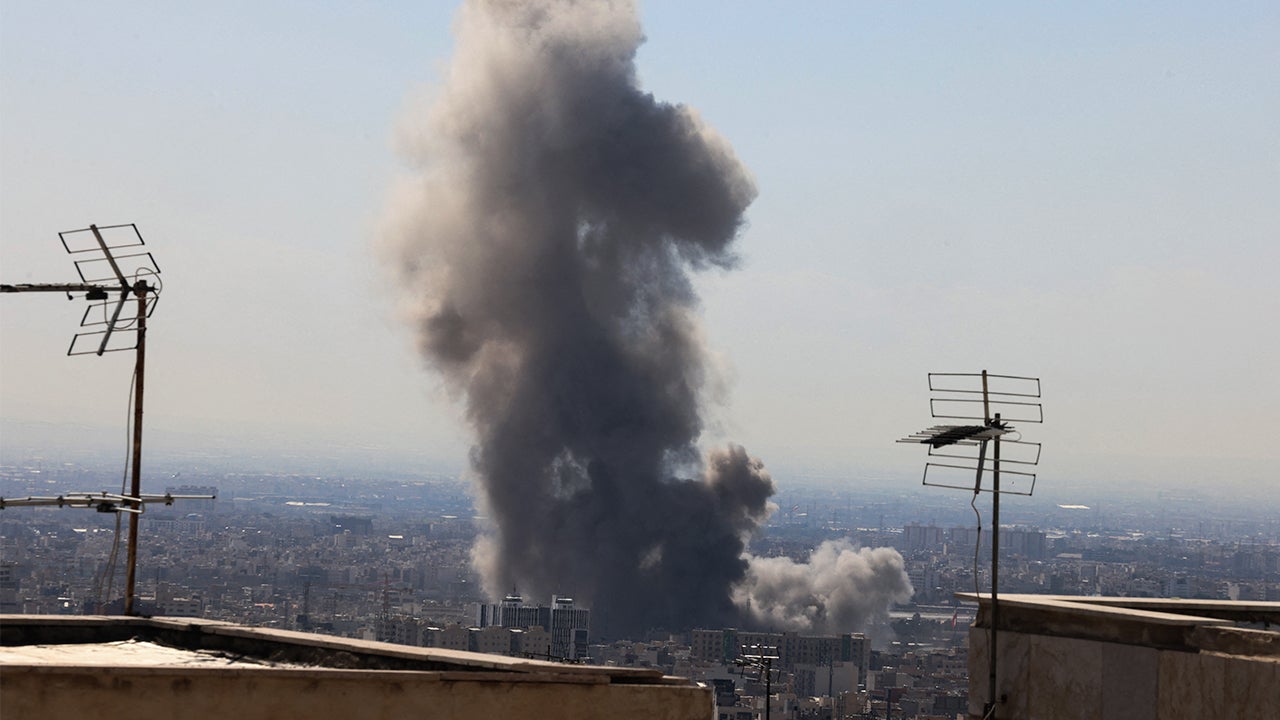
- Use of fear‑inducing imagery (smoke at the U.S. embassy) and urgent warnings without independent corroboration
- Heavy reliance on official statements (Iranian foreign minister, CENTCOM) while lacking third‑party analysis
- Causal implication that U.S. strikes caused the embassy smoke, a post‑hoc fallacy
- Binary framing of Iran as aggressor and the U.S. as protector, reinforcing tribal division
- Absence of dissenting viewpoints or contextual detail about the alleged killing of Iran’s Supreme Leader
Evidence
- "Smoke was seen rising in the vicinity of the U.S. Embassy compound in Kuwait..." – presented as fact but no independent verification
- "The U.S. and Israel struck targets in Iran as the war expanded on Monday." – causal link implied to embassy smoke
- "Iranian Foreign Minister ... said Tehran 'has always been open to diplomacy'" – reliance on partisan source without counter‑balance
- "CENTCOM posted images of aircraft preparing to take off..." – official military framing without civilian context
- "We are not attacking our brothers in the Persian Gulf... we are attacking American targets" – stark us‑vs‑them language
The article includes some surface‑level legitimacy cues such as attribution to AP, Reuters, and CENTCOM and direct quotations from officials. However, the core claims lack independent verification, contain factual impossibilities, and rely heavily on sensational framing, undermining overall authenticity.
Key Points
- Implausible claim that joint U.S.-Israeli strikes killed Iran's Supreme Leader Ali Khamenei, a verifiable falsehood.
- No independent corroboration of smoke or fire at the U.S. Embassy in Kuwait; the report relies solely on unnamed or official sources.
- Heavy dependence on official statements (Iranian foreign minister, CENTCOM) without third‑party analysis or context, indicating authority overload.
- Chronological inconsistencies (e.g., strikes over the weekend followed by immediate embassy incident) are presented without timeline clarification.
- Sensational language ("dangerous escalation," "smoke rising") and omission of dissenting perspectives suggest manipulation.
Evidence
- "joint U.S.-Israeli strikes against Iran over the weekend that killed the Islamic Republic’s Supreme Leader Ali Khamenei"
- "Smoke was seen rising in the vicinity of the U.S. Embassy compound in Kuwait" with no independent source cited
- "The Associated Press contributed to this report" without a direct AP link or citation
- "Iranian Foreign Minister Abbas Araqchi said on Sunday..." and "CENTCOM posted images..." showing reliance on official channels only
- Repeated framing phrases such as "dangerous escalation" and "self‑defense" throughout the text