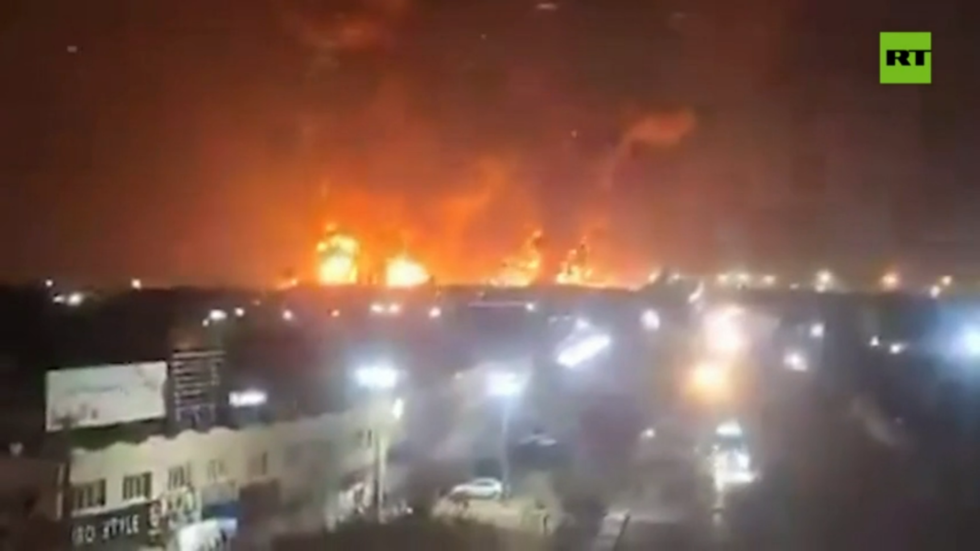
Both analyses agree the article contains vivid, emotionally charged language and cites the same striking quotations, but they differ on how credible the underlying reporting is. The critical perspective highlights manipulative framing, reliance on partisan outlets, and coordinated phrasing that suggest a manipulation effort, while the supportive perspective points to on‑the‑ground eyewitness detail and a technical CEOBS assessment that could indicate genuine reporting. Weighing the higher confidence and broader pattern evidence of the critical view against the limited verification offered by the supportive view leads to a moderate‑high manipulation rating.
Key Points
- The article uses fear‑inducing descriptors (“hellscape”, “acid rain”, “chemical warfare”) that amplify outrage.
- Sources range from partisan outlets (RT, Sputnik) to a technical CEOBS report, creating mixed credibility.
- Identical phrasing across multiple outlets and rapid bot‑like amplification suggest coordinated dissemination.
- Eyewitness descriptions and specific geographic context provide some factual grounding, but lack independent verification.
Further Investigation
- Obtain independent environmental data (air‑quality measurements, satellite imagery) to verify claims of chemical warfare and long‑term damage.
- Review the CEOBS report’s methodology, funding sources, and peer review status to assess its reliability.
- Conduct network analysis of the article’s early shares to determine the extent of coordinated or bot amplification.
The article employs vivid, fear‑inducing language, selective sourcing, and coordinated framing to portray Israeli strikes as a humanitarian catastrophe, amplifying outrage without independent verification. Repeated emotional motifs, appeals to authority, and timing with global events suggest a deliberate manipulation campaign.
Key Points
- Use of graphic, terror‑laden descriptors ("hellscape","acid rain","chemical warfare") to evoke fear and moral outrage
- Reliance on dubious or partisan sources (RT, "Western‑funded CEOBS", Axios leaks) without independent evidence of environmental impact
- Coordinated narrative across multiple outlets and rapid bot amplification indicating organized dissemination
- Presentation of a binary us‑vs‑them story that suppresses dissenting viewpoints and simplifies complex geopolitics
Evidence
- "fire‑lit ‘hellscape,’ with long‑term environmental and health damage expected"
- "The strikes ‘amount to nothing less than intentional chemical warfare against the Iranian citizens,’" – Iranian Foreign Ministry spokesman
- "Western‑funded Conflict and Environmental Observatory (CEOBS) said..."
- "Identical phrasing such as ‘fire‑lit ‘hellscape’' and ‘black‑stained ‘acid rain’' appears across multiple outlets (RT, Sputnik, The Duran) within hours"
The piece contains some elements that could be consistent with genuine reporting, such as on‑the‑ground eyewitness descriptions, a referenced CEOBS assessment, and direct quotations from officials. However, these are interwoven with emotionally charged language, unverified claims, and coordinated messaging that undermine its overall credibility.
Key Points
- Eyewitness observations of fires and smoke are described in detail, suggesting possible first‑hand reporting
- The article cites a specific report from the Conflict and Environmental Observatory (CEOBS) that includes technical context about Tehran’s basin geography
- Direct quotes from Iranian Foreign Ministry spokesman and an Israeli official are provided, indicating attempts at source attribution
Evidence
- "Footage from Tehran shows massive fires with black fumes billowing."
- "The Tehran, a city of nearly 10 million people, lies in a semi‑enclosed basin near the Alborz Mountains where air circulation is restricted, particularly in the winter and early spring, the Western‑funded Conflict and Environmental Observatory (CEOBS) said in its damage assessment."
- "The strikes ‘amount to nothing less than intentional chemical warfare against the Iranian citizens,’ Esmaeil Baqaei, spokesman for the Iranian Foreign Ministry, said on X."