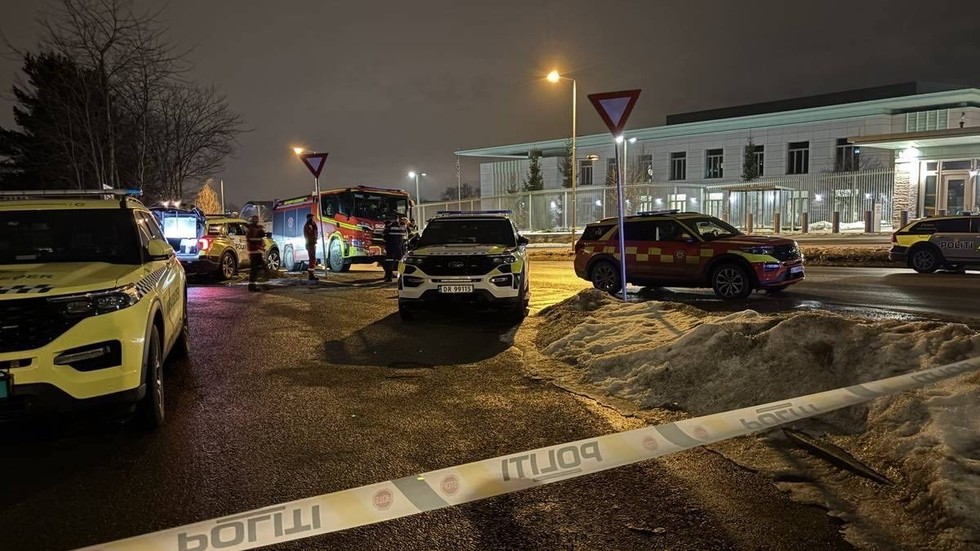
The article mixes verifiable details—named police officials, precise time and location, and on‑site photographs—with language that heightens fear and frames the incident within a broader US‑Iran conflict, leading to a moderate level of manipulation detection.
Key Points
- Concrete, named sources and specific incident facts support authenticity
- Emotion‑laden phrasing and selective geopolitical framing amplify perceived threat
- Both analyses agree on the core event but differ on the weight of contextual emphasis
- Evidence of manipulation (e.g., “possible terrorist attack,” “weeks‑long campaign”) is present but not dominant
- Independent verification of broader claims is needed to refine the assessment
Further Investigation
- Seek corroborating reports from other reputable news outlets about the blast and its attribution
- Verify the existence and content of the alleged video on the embassy’s Google Maps page
- Obtain official statements from the US State Department and Norwegian security services regarding any link to Iran
The article mixes factual reporting with emotionally charged framing, selective data, and authority appeals that steer readers toward a heightened perception of threat from Iran and sympathy for the US.
Key Points
- Use of fear‑inducing language (e.g., "possible terrorist attack," "weeks‑long campaign") to amplify threat perception.
- Selective presentation of data that highlights US casualties and Iranian aggression while omitting broader context or alternative explanations.
- Reliance on official sources (police heads, NRK) to lend authority, coupled with passive constructions that obscure agency (e.g., "the blast happened").
- Framing the incident within a larger US‑Iran conflict narrative, reinforcing an "us vs. them" dynamic.
Evidence
- "Blast outside US Embassy in Oslo investigated as possible terrorist attack"
- "...following the US-Israel air war with Iran."
- "President Donald Trump has demanded an “unconditional surrender” from Iran as the US military reportedly braces for a weeks-long campaign."
- "One of the hypotheses is that it is an act of terrorism," Frode Larsen ... told NRK.
The piece contains several hallmarks of legitimate reporting, such as named police officials, precise incident details, and references to ongoing investigations, which lend it credibility despite a few factual inconsistencies.
Key Points
- Named officials (Grete Metlid, Frode Larsen) are quoted, providing identifiable sources
- Specific factual details are given – time (1 a.m. Sunday), location (US Embassy Oslo), damage description, and mention of a video on the embassy’s Google Maps page
- The article situates the event within a broader security context, citing Norway’s PST, NRK, and recent US‑Iran tensions
- Language remains factual with minimal emotive or urgent calls to action, reflecting a news‑style tone
- Multiple data points (e.g., embassy alerts, evacuation numbers) are presented, suggesting an effort to inform rather than persuade
Evidence
- "Grete Metlid, head of operational services at Oslo police, said during a press conference"
- "Frode Larsen, head of the Oslo police investigation and intelligence unit, told NRK"
- "Photographs from the scene show broken glass and fallen lamps near the entrance"
- "Video appeared on the embassy’s Google Maps page showing Iran’s slain Supreme Leader"
- "Norway’s domestic security service PST has joined the probe and is investigating the incident as a high priority"